

The Season of the Witch
10/28/2024
6 min reading time

In our next Double Feature, artist Margaret Haines will present her video work “On Air: Purity, Corruption & Pollution” (2024). Drawing on the life of Joan of Orléans (Jeanne d’Arc) and the ideas of occultist Cameron, Haines’ speculative sci-fi film centers on the notion of a female Messiah.
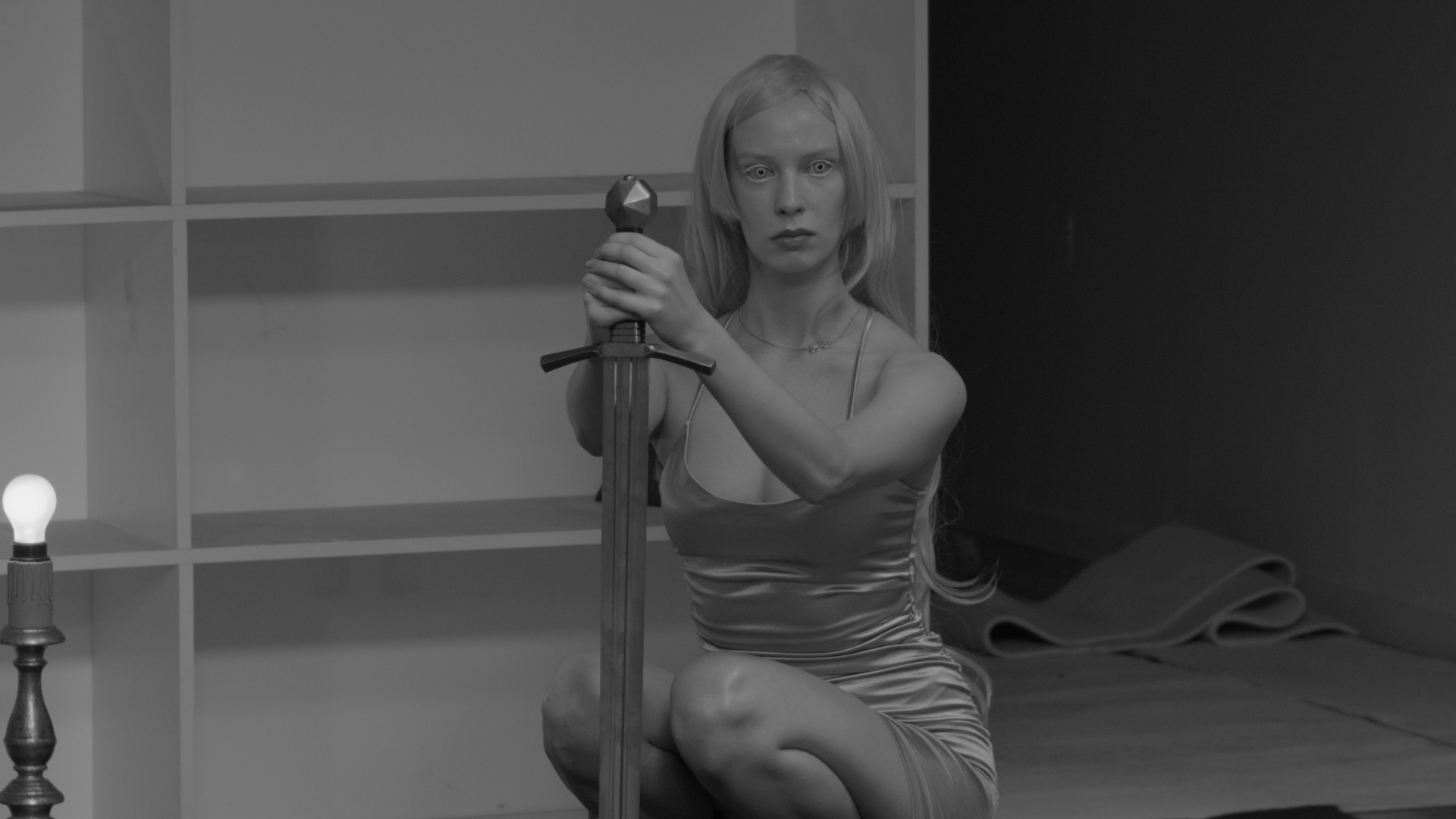
As in the great sagas in human history, in Margaret Haines’ film “On Air: Purity, Corruption & Pollution” (2024) the act of violence fulfills a prophesy. Boris, or so we learned from the female narrator off-screen, is Charlot’s mythical twin brother from whom she was separated immediately after her birth. The two grew up with different parents, and without their having any knowledge of each other their biographies developed in diametrically opposing directions. While Charlot knew nothing of the prophesy that her adoptive mother once heard about her, she unknowingly and despite many detours embarks down her predestined path.
Between (eco)feminism, occultism, and prophesies
Campaign against nuclear power, somber villain, bands of human traffickers, (eco)feminism, occultism, witch burnings, prophesies, transhumanism, and biohacking: Margaret Haines’ latest video forges a sci-fi meta-cosmos replete with associations and powerful images and sounds. The film is profoundly influenced by Haines’ strong interest over the last decade in Marjorie Cameron Parsons Kimmel, often simply known as Cameron. The illustrious artist, poet, actress and occultist is today probably remembered, if at all, only by a few and then as the protagonist in Kenneth Anger’s “Inauguration of the Pleasure Dome”. Until his death, she was married to rocket propulsion expert Jack Parsons, himself an ardent follower of the occult teachings of Aleister Crowley, she herself delved deep into occultism and esotericism. The themes of sexual magic and mythical prophesies typical of these movements recur in her artistic work, although her oeuvre never received great attention during her lifetime and was first rediscovered in the last ten years or so. (An exhibition of the works of Wallace Berman at Ferus Gallery included one of her works that was deemed to be lewd, and the show was raided by the L.A: Vice Squad and Berman was arrested.)

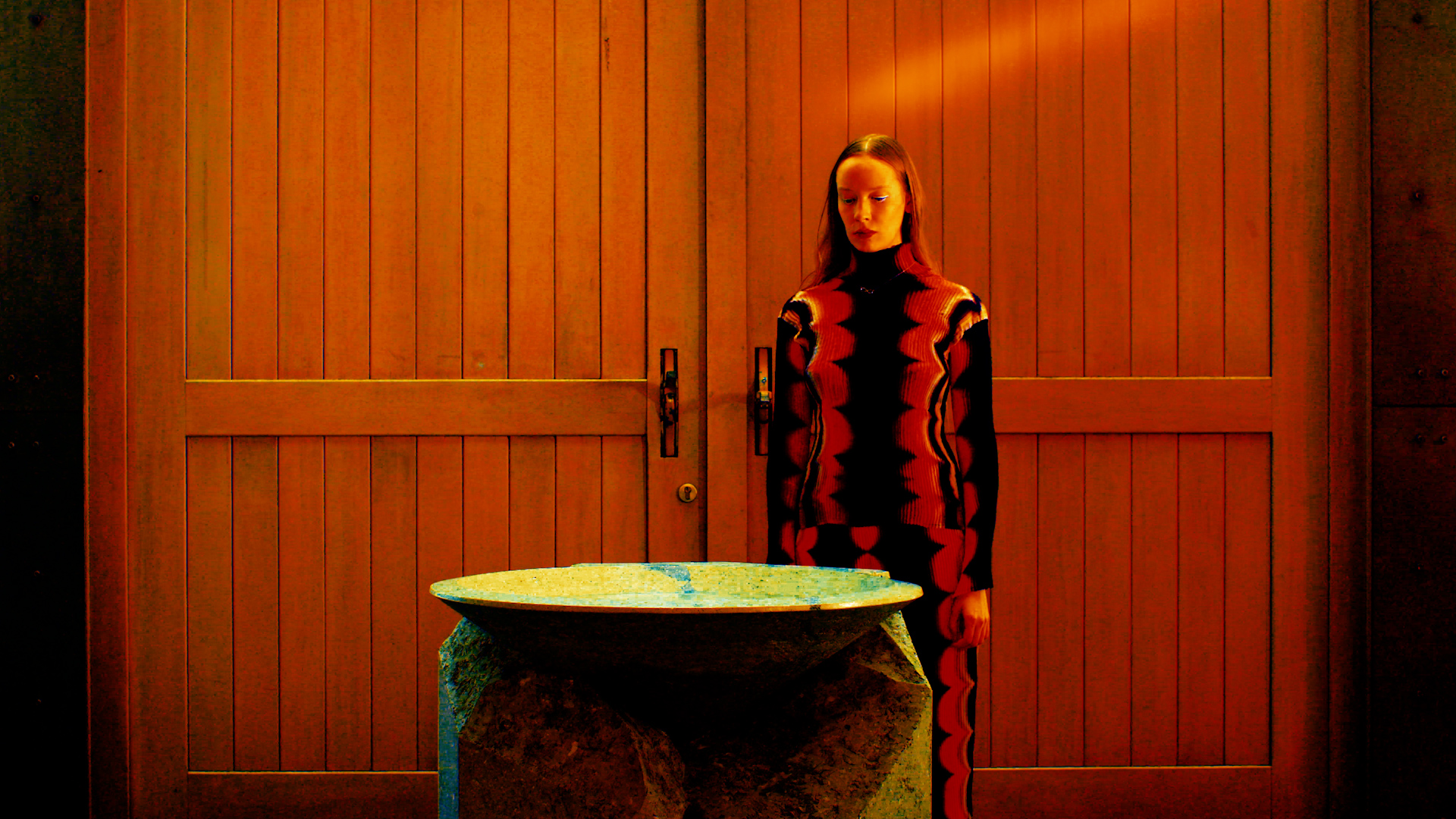
“I’m offered a window into […] The Women Who Were Left in the Shadows”
Margaret Haines
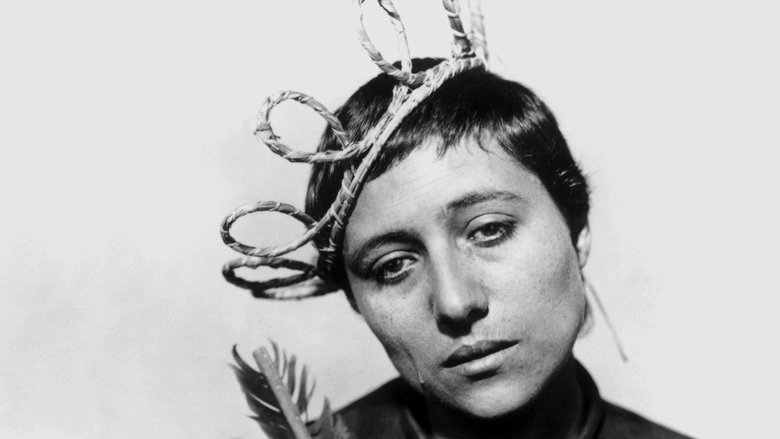
Carl Theodor Dreyer’s “La Passion de Jeanne d’Arc”
At the end of her film, Margaret Haines explicitly refers to the short life of Jeanne d’Arc; by contrast, in 1928 in his film “La Passion de Jeanne d’Arc” Carl Theodor Dreyer exhaustively explored the story of her suffering. In the context of the Hundred Years War between France and England, the young woman decisively influenced the course of the conflict after initially convincing the French Dauphin of the vision sent to her by God of France’s fate and then also being successful in the military campaign, for example by driving the English out of Orléans. Dreyer’s silent movie concentrates, however, completely on the trial by inquisition that the Bishop of Beauvais brought against Jeanne d’Arc (Renée Falconetti). Dreyer wrote the script after spending a year researching her life and it is based on the original transcripts of the trial, which involved her being interrogated 29 times.