

Hyper-visible? Queerness in the Age of generative AI
06/26/2026
6 min reading time
Generative AI is used not only to generate images but also to reproduce ideas of what is considered ‘normal’. What happens if digital systems are deployed to assign gender, identity, and a sense of membership?
Generative systems of artificial intelligence (AI) create texts, images, videos, or sound on the basis of statistical calculations. Unlike classical algorithmic systems which primarily sort or analyze information, the generative systems combine existing data to produce seemingly new content. In other words, these systems are based neither on intrinsic creativity nor on intentionality but instead on calculating statistical probabilities derived from existing data resources. For that reason, generative AI systems are increasingly in the focus of feminist and queer critique: They learn using digital databases that are suffused with standardizations and exclusions. And reproduce exactly those images, categories, and scientific orders that already predominate in the data on which they are trained. The reason for this predominance is that digital infrastructures have arisen historically along an axis of hegemonial power and image structures and do not objectively represent social reality. What frequently becomes visible in databases appears as the norm in the system; what is rarely visible is declared to be an exception, and thus an error. And these deviations from the ‘norm’ are then treated exactly as if they were errors: They get “corrected”.
“AI-generated images naturalize heteronormative gender roles and attributions, white notions of identity, and normative family models, while obscuring social injustices and queer lived realities.”
Authoritarian image politics
Over and above these economic dynamics, smart technological systems are increasingly being developed, trained, and deployed for processes of political will formation. Dark Enlightenment movements (e.g., anti-democratic tech currents that advocate absolutist, autocratic dictatorships) tend ever more to rely on authoritarian image practices that are disseminated through the social media, algorithmic feeds, and AI-generated image worlds. Such visual strategies seek to create and stabilize uniform notions of gender, bodies, and membership of a nation. In this context, AI-generated images function as tools for producing societal realities that seek to promote fascist thought. Through both their purported authenticity and their mass dissemination they resemble visible evidence. They naturalize heteronormative gender roles and attributions, white notions of identity, and normative family models, while obscuring social injustices and queer lived realities. In this way, they help stabilize reductive notions of gender and membership of society while promoting the idea of a technocratic society to which there is no alternative.
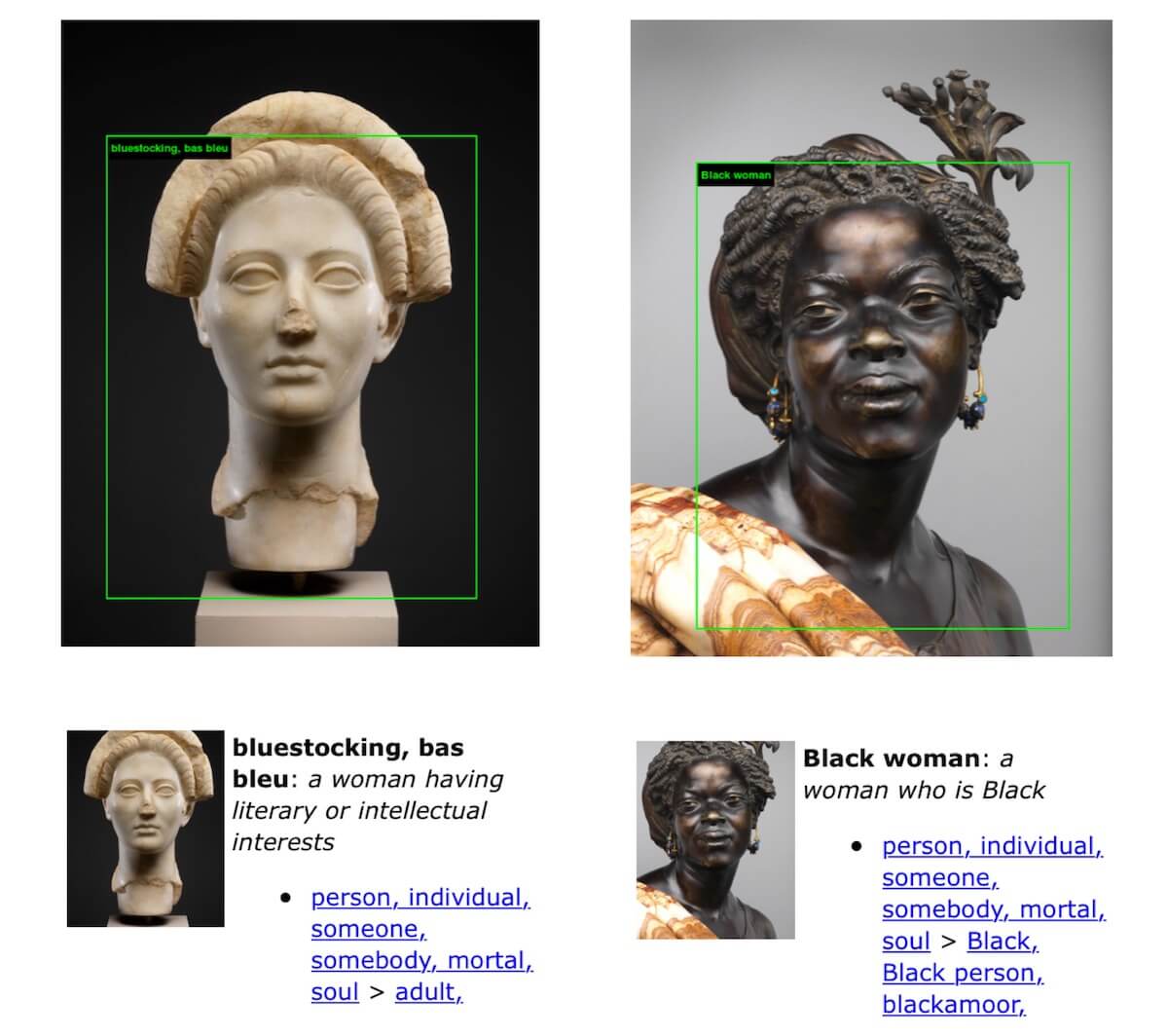
At the same time, we are witnessing another shift: Achieving visibility can no longer exclusively be construed as an emancipatory objective. For marginalized groups, visibility can increasingly become a danger. Data has first to be standardized before an AI system is able to identify and classify people in digital images: Faces are given labels, genders assigned to categories, bodies translated into data schemes. What is considered realistic or probable in such systems takes its cue from the majority within the respective dataset. This becomes especially problematic in the context of automated gender attributions, i.e., AI processes that deduce a person’s gender from biometric characteristics such as faces or movement patterns.
„A queer critique of generative AI is not exhausted with a call for more visibility or diversity within existing systems. Rather, it points to the necessity of questioning the very bases of digital classification that I have outlined here, and thus also those societal orders that are sedimented in these systems.”
Algorithmic discrimination
The potential consequences of such algorithmic discrimination can be seen clearly as regards racist classifications. There is the well-known case of an automatic soap dispenser that did not recognize black skin because the sensors had primarily been trained on white skin. Decidedly more problematic are racist distortions in facial recognition systems. Studies show that Blacks are more frequently recognized and thus criminalized in automated surveillance systems. The historical training data such systems are based on frequently originated in government image archives, including mug shots and prison data. Since Black persons are disproportionately criminalized owing to racist structures, the result are datasets in which this inequality was already innate. AI systems onboard such distortions and amplify them. On that basis we can ask what consequences an increased algorithmic recognizability of queer persons would have within repressive political systems. In authoritarian contexts, for example in the context of digital surveillance in China or anti-queer legislation in the USA, the algorithmic legibility of queer identity can become an instrument of political repression. At the same time, this reveals the resistive potential of queerness: its partial illegibility compared to database-driven regimes of identification. Machine learning operates through classifying, while queerness undermines such unequivocalness. A queer critique of generative AI is thus not exhausted with a call for more visibility or diversity within existing systems. Rather, it points to the necessity of questioning the very bases of digital classification that I have outlined here, and thus also those societal orders that are sedimented in these systems.
