

Between contemplation and violence: The sea in the fine arts
12/29/2025
11 min reading time
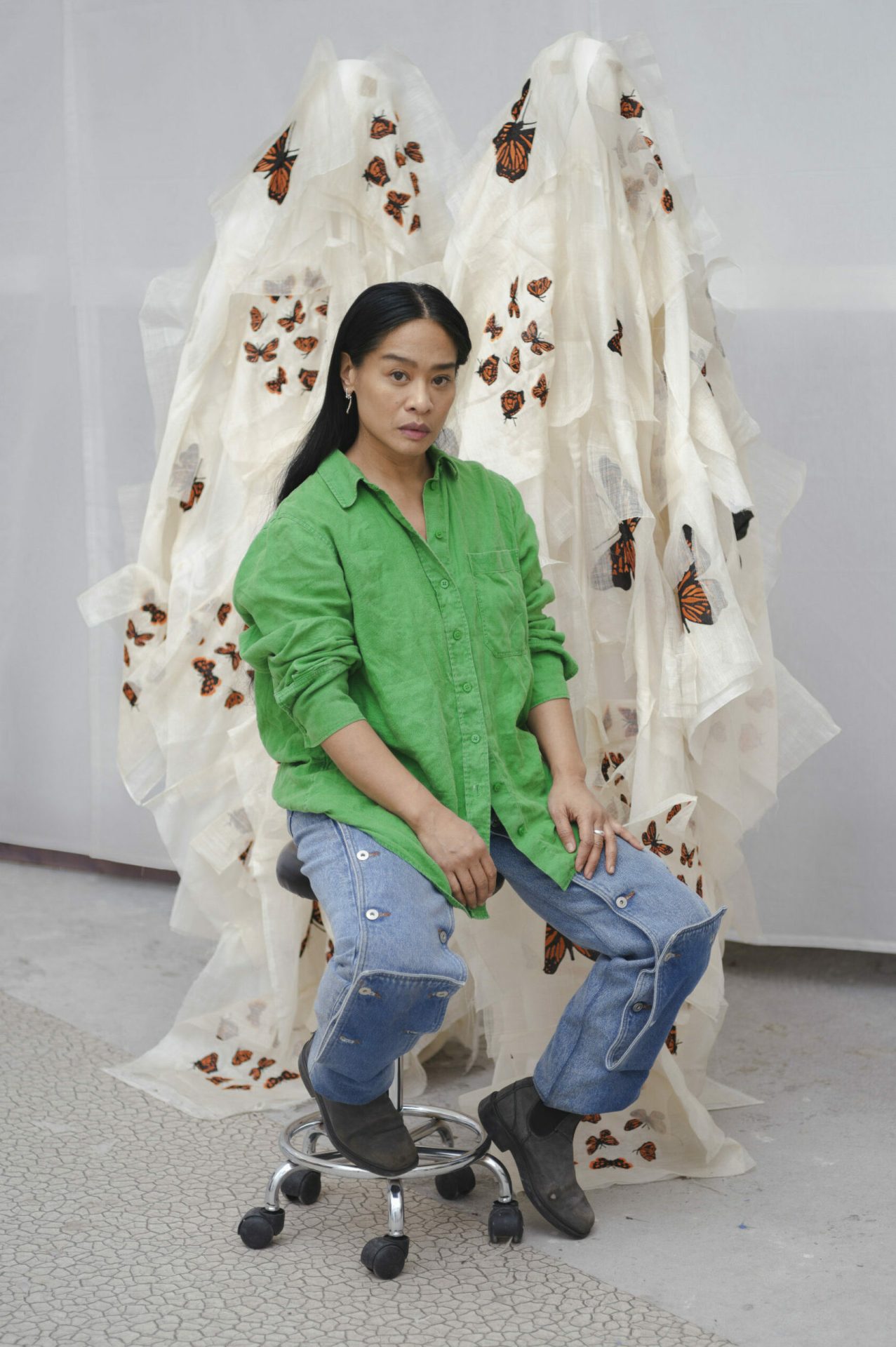
Many artists consider the sea a mirror of a raft of social issues, starting with the threats to the ecosystem, (post)colonialism, experiences of exile and indigenous traditions, through to globalized world trade. And Stephanie Comilang is no exception. Here are five pieces by other artists straddling the last 100 years that are worth highlighting.
Lorem Ipsum
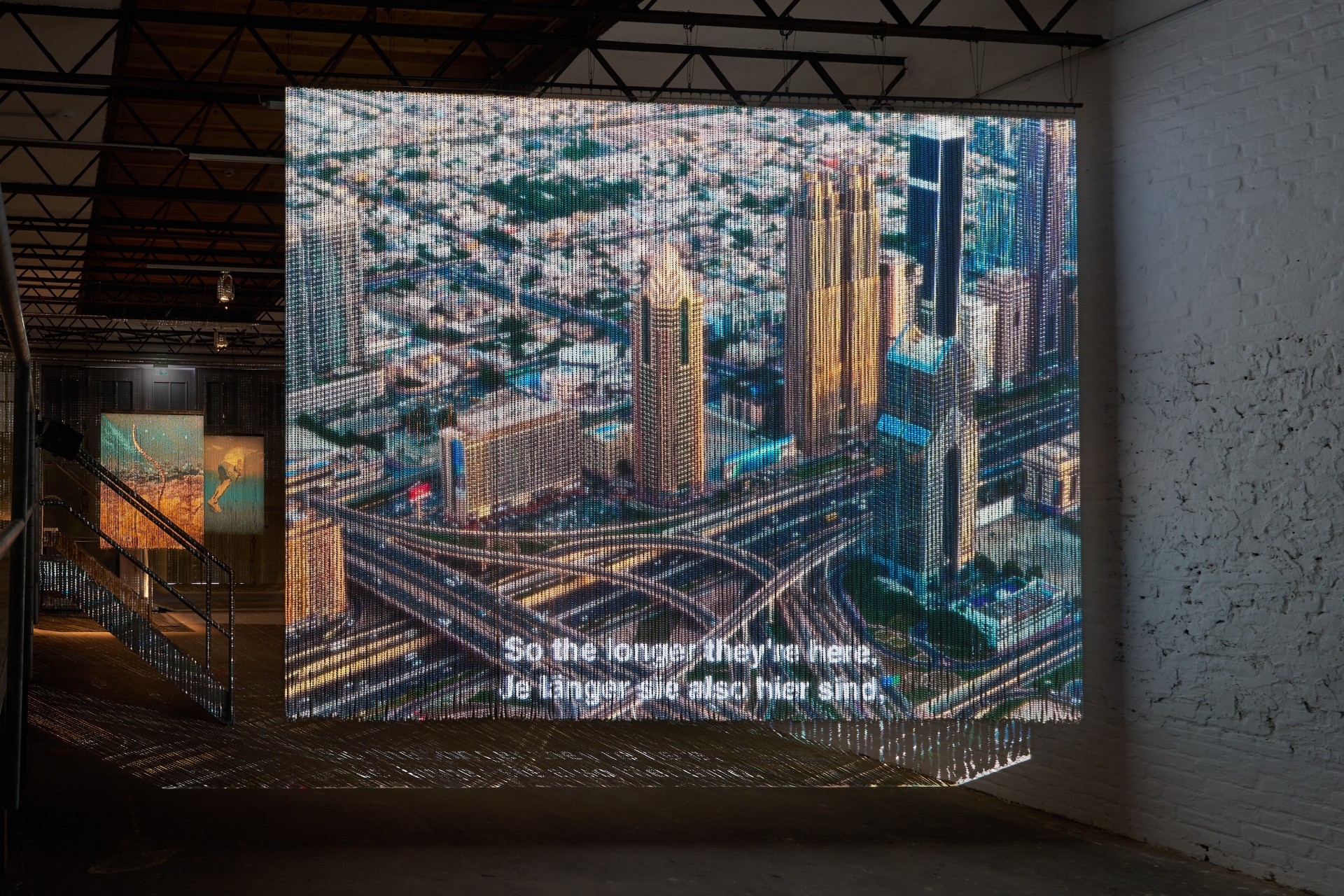
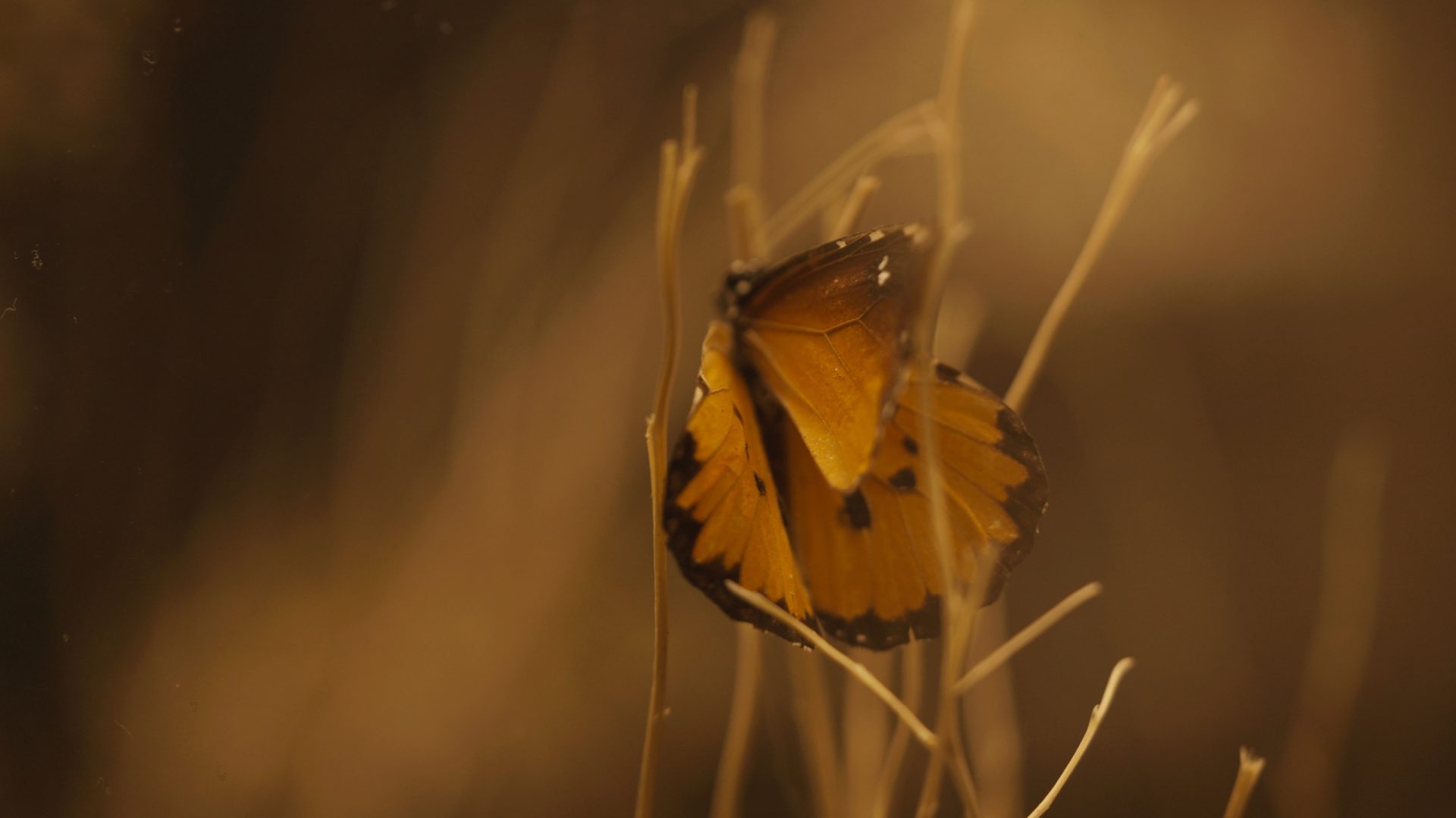
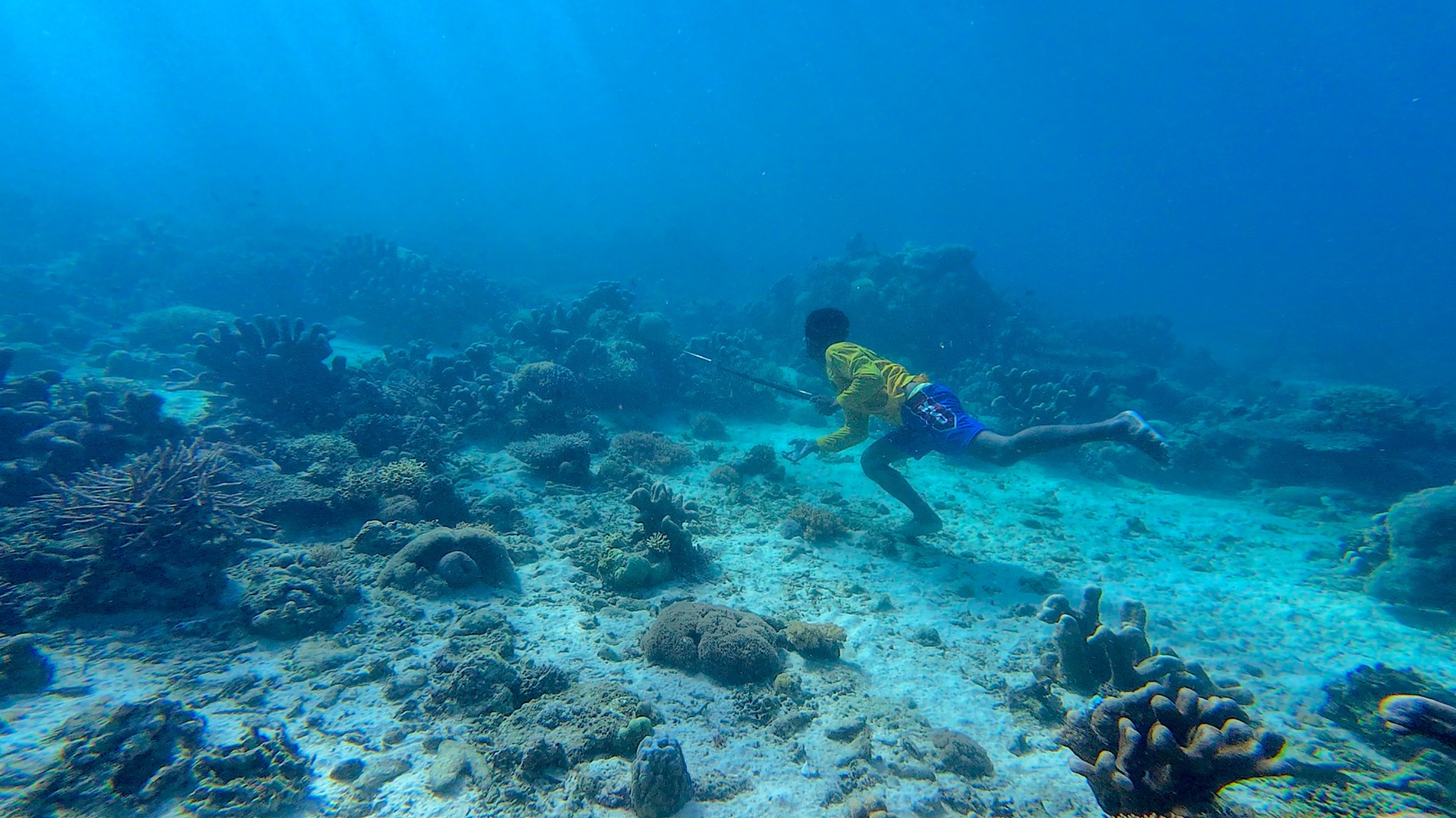
In her filmic diptych entitled “Search for Life”, Stephanie Comilang presents her search as a kind of collage that fuses reality and fiction, human and non-human actors as well as history and present. In this way, the artist leads us deep into the cultural history of her Philippine roots, whence she creates a global, intergenerational, and posthuman network of interrelated narratives that underline the role of the sea as the central venue of sociocultural practices, migratory movements, and the globalized economic system. In “Search for Life I”, for example, the solitary lived reality of the Philippine sailors at the heart of the international seafaring trade is contrasted to the figure of the Monarch butterfly – during its migration each fall it covers a route from Canada as far south as Mexico and symbolizes at one and the same time migratory movements and the power of transformation. Moreover, both the butterfly and maritime traffic bring to mind by association the Philippines’ colonial past, and the impact it continues to have. In “Search for Life II”, the Sama-Bajau pearl divers, an indigenous Philippine people who have practiced the tradition for centuries, are contrasted with personal experiences of migration and images of the Burj Khalifa as a symbol of wealth, and the trade in oil and in pearls. In this way, Comilang traces all manner of international connections and economic dividing lines in and along the oceans, oscillating between the past and the present. She assembles loosely connected narratives from documentary portraits, autobiographical highlights, and completely fictitious elements. A sense of dreaminess, melancholy and spirituality repeatedly permeate the harshness of the social reality she presents and the global power relationships – and form a sequence of apparently free associations. In reality, the filmic composition is, however, as precisely threaded as the thousands of synthetic pearls onto which the “Search for Life II” is projected in the exhibition space.
With this trenchant piece, Stephanie Comilang takes her place in a rich lineage of international artists who explore all manner of socio-cultural, aesthetic, and spiritual currents that are constantly focusing our gaze on the world of the waves. Here are five artworks produced in the course of the last 100 years that are well worth revisiting.
1
Max Beckmann
“Departure” (1932–1935)
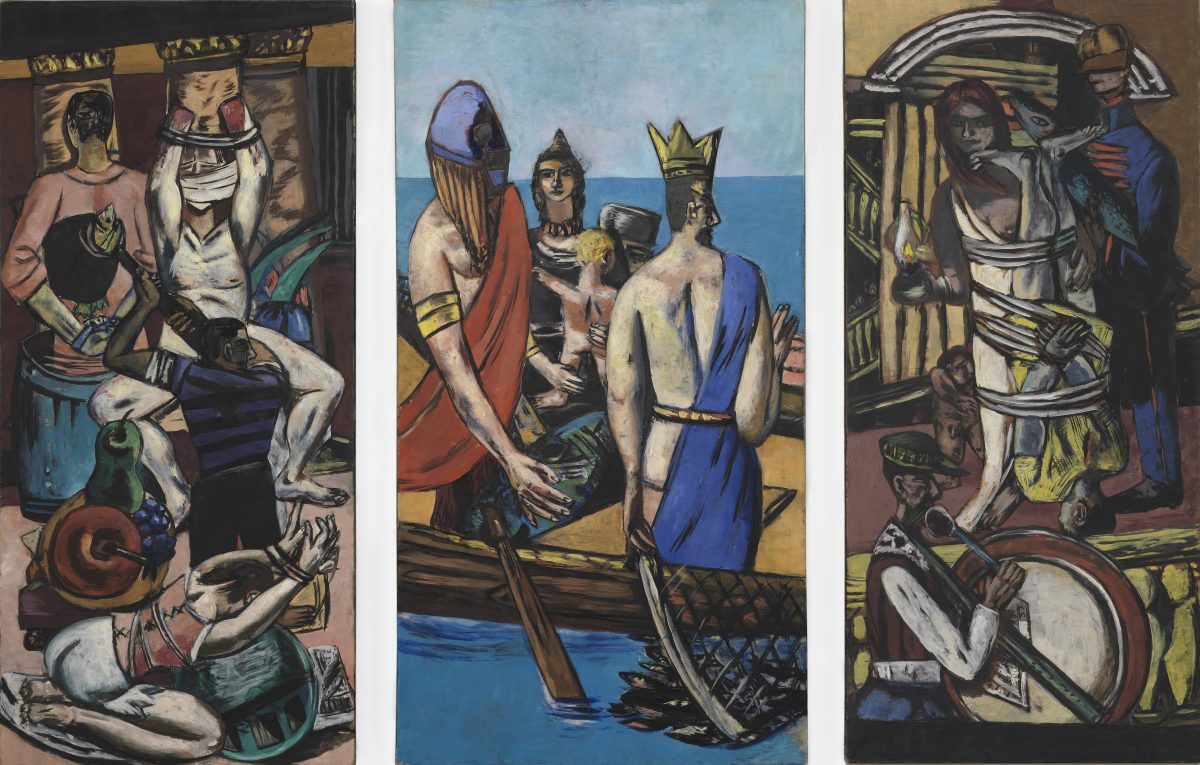
In the central panel of his “Departure” triptych, Max Beckmann presents a calm and motionless sea as the opposite of the chaos and violence intimated by the two side-wings. While still in Frankfurt/Main, Beckmann started the piece in the final year of German inter-War democracy, before in 1933 moving first to Berlin and then fleeing four years later to Amsterdam and into exile. While still in Germany he was forced to witness how the Nazi regime denigrated his paintings in the traveling “Degenerate Art” exhibition it organized.
In this context, “Departure” is often read as a kind of dark premonition, pre-empting the bloody persecution of political opponents that the Nazis perpetrated after taking power with its presentation of sadistic torture that we can observe on the two wing panels of the triptych. The painter depicts the figures tied up, gagged, and tormented as part of an eclectic, turbulent composition of a still life gone wrong, a magic crystal ball, and awry architecture. This contrasts sharply with the pictorial events in the central panel, in which the straightforward blue of the sky and the sea is populated by a solitary boat that serves as the stage for a king who is fishing, his bodyguard, and the queen with her child. Although throughout his life Beckmann rejected any unequivocal interpretation of his works, he declared that the royal couple in the center of his composition had succeeded in fleeing, while the great treasure that is freedom lay in the form of the naked child on the mother’s lap.
The sea, and Beckmann repeatedly painted it while in exile, can thus be read in the triptych as a symbol for bidding farewell and heading into uncertainty, fleeing into the blue, but also as a pointer to a new beginning. In other words, a new beginning that could only be found in exile.
2
Betty Beaumont
“Ocean Landmark” (1978–1980)
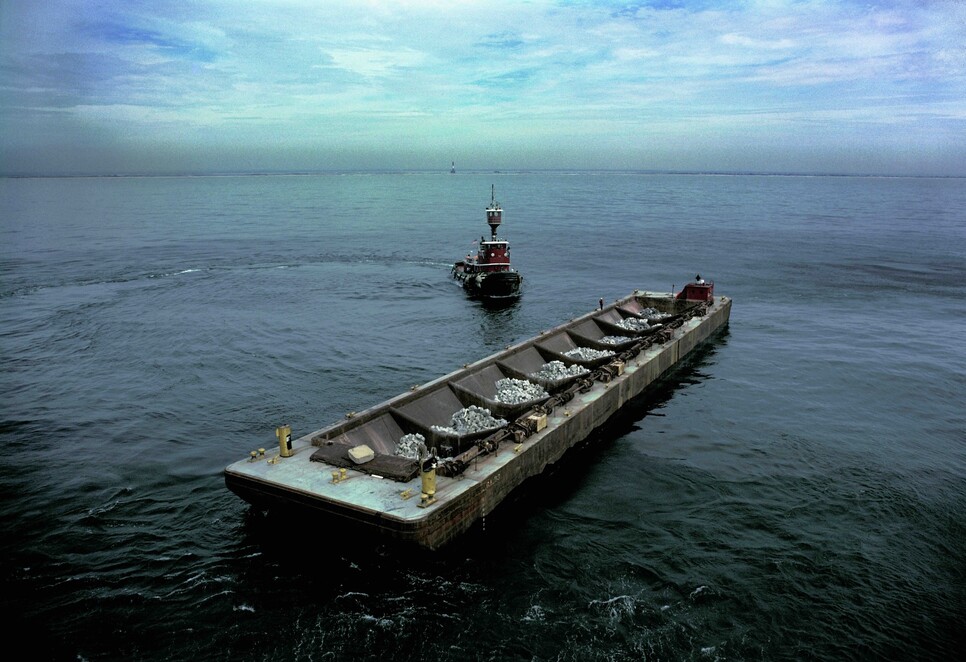
At the end of the 1970s, Betty Beaumont was also working on a relaunch for the underwater world off the coast of New York. Collaborating with divers, chemists, marine biologists, and engineers, the Canadian-American artist spent several years developing an artwork that was soon thereafter to be lowered to rest on the Atlantic continental shelf.
To that end, along with her interdisciplinary team Beaumont processed 500 tons of coal waste from nearby industry to create an artificial coral reef destined to combat the consequences of local over-fishing and toxic industrial waste while simultaneously creating a sustainable habit for the marine ecosystem. The project became so successful that the US National Oceanographic and Atmospheric Administration lists the “Ocean Landmark” in its coastal navigation chart for the approach to New York Harbor as a “Fish Haven”. In this way, she created a piece in and for the ocean that can only be experienced by us in terms of its ecological impact.
Beaumont sensitizes us not only to the way in which industrial operations threaten the world’s seas, but also and at the same time shows how trailblazing innovations along the interface between art and science have the potential to foster harmony between marine protection and economic activities.
3
Grada Kilomba
“O Barco” (2021)
Grada Kilomba’s interdisciplinary installation entitled “O Barco” memorializes the victims of the transatlantic slave trade. And in it, the Atlantic has a central role. Kilomba devised the piece for the BoCA (Biennal of Contemporary Art) in her hometown of Lisbon, where it went on show for the first time in 2021 at the mouth of the Tejo River. In this way, the artist erected an abstract-poetic memorial at a place where Portuguese colonial history still rises proud over the people’s heads – in the form of magnificent buildings, monuments, and museums.
In “O Barco”, by contrast, the thrust is horizontal – with a formation of 140 pitch-black charcoaled wooden blocks that outline the bony skeleton of a slaver’s hull and at the same time allude to the human freight inside it. For over three centuries, the freight consisted of Black bodies stacked closely next to and over one another, the bodies European slave traders had robbed the African continent of and displaced to North and South America. By way of accusation, the bow of the “Barco” points to the Atlantic, in whose cold waves the West’s slave-based economy swallowed up the humanity and identity of its African prisoners in order, at the end of the day, to spit them back out as commodities to be sold.
In Kilomba’s hands, the boat, and with it the sea, becomes a witness to these gruesome acts, but also a symbol of healing. Several of the blocks therefore feature a poem, whose content and multilingual nature (it is written, among others, in Yoruba, Kimbundu, Creole, Portuguese, English and Arabic) evoke a universal humanism. Moreover, the artist commemorates the souls of those kidnapped, by having performers dance through the ship’s ribs in three acts.


4
Shneider Léon Hilaire
“Healing by the power of Agwé” (2022)
An idea of how saltwater was once seen and cherished independent of colonialism is symbolized by Haitian painter Shneider Léon Hilaire in his series entitled “Nuits haïtienne” (Haitian Nights).
The Haitian Vodou cosmology construed the sea as one of the strongest natural powers and believes that a whole host of influential lwa (spirits) inhabit it. One of the most important among them is Agwe, the patron of seafarers. It is Agwe whom Shneider Léon Hilaire evokes in “Healing by the Power of Agwe”. Against a sky dominated by somber clouds, this lwa has arisen from the white sea foam and now thrones as a strict looking white outline on the painting’s vertical central axis. A plain scepter in one hand and crowned by a headdress of shells and conches, he gazes at an older woman who with her legs protectively shields a young man who huddles there. Perhaps she is a concerned mother who has called on Agwe to plead with him for safety for her son on the high seas.
Hilaire’s oeuvre repeatedly presents sea snakes, mermaids, and nocturnal Vodou rituals on the beach, thus illustrates the spiritual power that is at home in the oceans and constantly bear on their waves to land.

5
John Akomfrah
“Listening All Night to the Rain” (2024)
Some of these socio-political, cultural-historical, and spiritual connotations of the ocean occur as regularly in John Akomfrah’s oeuvre as the rhythmic interchange of high and low tide. The waters have always played a key role in the filmic installations of the British-Ghanaian filmmaker.
For example, white frothy waves permeated all three works in his retrospective “A Space of Empathy” that went on show in SCHIRN in 2023. Back then, Mearg Negusse highlighted the broad weave of associations, history/stories and ecologies that are innate to the sea in particular in the monumental multiscreen installation “Vertigo Sea”. At the time, Akomfrah was already working on his next and largest epic to date on the blue element: For the 60th Biennale di Venezia he transformed the Neoclassical architecture of the British pavilion into an immersive audio-visual gesamtkunstwerk. Subdivided into eight cantos, visitors were greeted by a sea of historical audio recordings, breathtaking documentation of nature, and the meditative sounds of rain. In the process, the ambitious work drew not only on several hours of video and audio material, but also on a veritable flood of themes, geographies, and history: The freedom struggles in Vietnam, Kenya and Congo are discussed as are the Korean War, migration during the “Windrush” generation, and the pioneering battle for climate protection by conservationist Rachel Carson (1907–64). The theme of water connects, accompanies, and embraces these events. Here, Akomfrah grasps the ocean as a kind of vessel that contains our past and causes our present to rain down on us or burst over us.
Akomfrah describes listening to the burble, roar, or crash of water as a source of the path to a more sustainable and just future – a perspective that is realized in various different ways in the artistic exploration of the ocean(s) offered here.
