
Now at the SCHIRN: Thomas Bayrle. Be Happy!
01/30/2026
14 min reading time
The art of the superform: Starting on February 12, the SCHIRN will be showing current works by Thomas Bayrle. Interwoven, interconnected, and repetitive, he focuses on the structures of consumption, work, urbanity, and technology, pop and mass culture, and (substitute) religion.
Lorem Ipsum
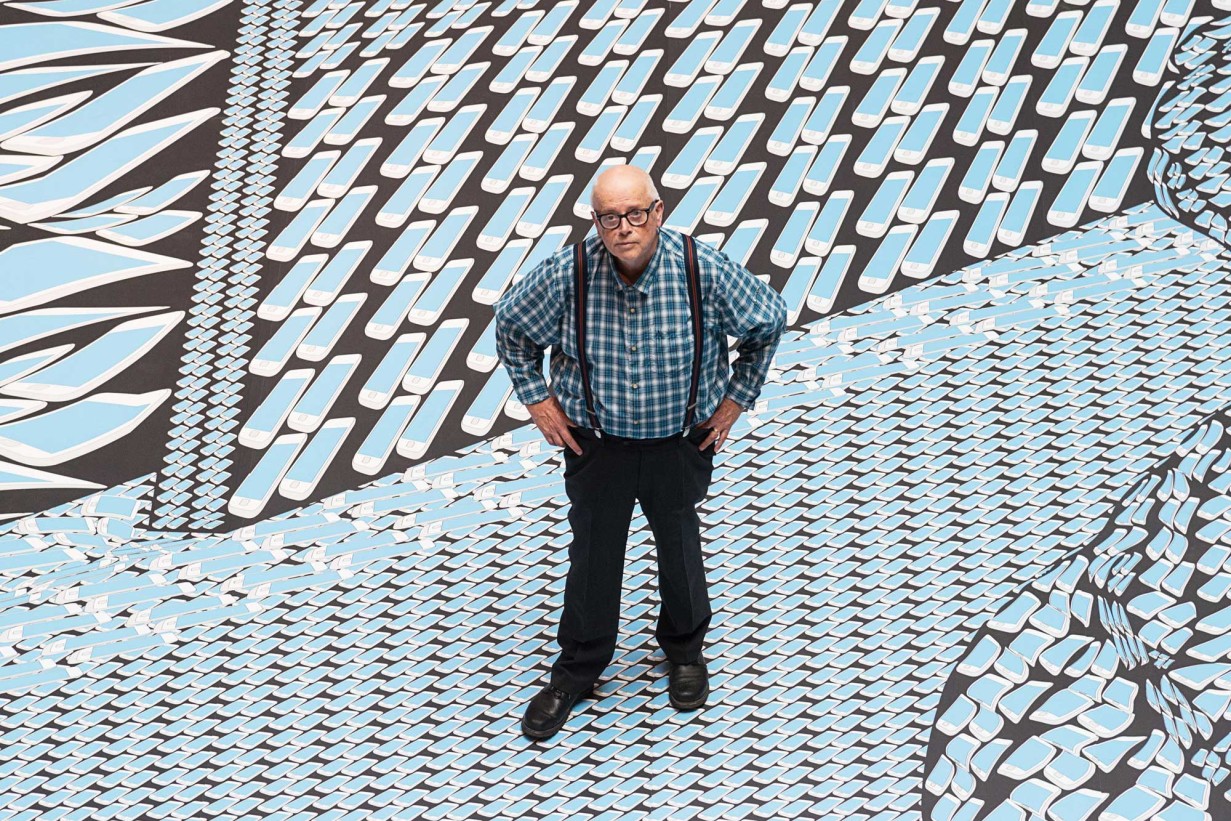
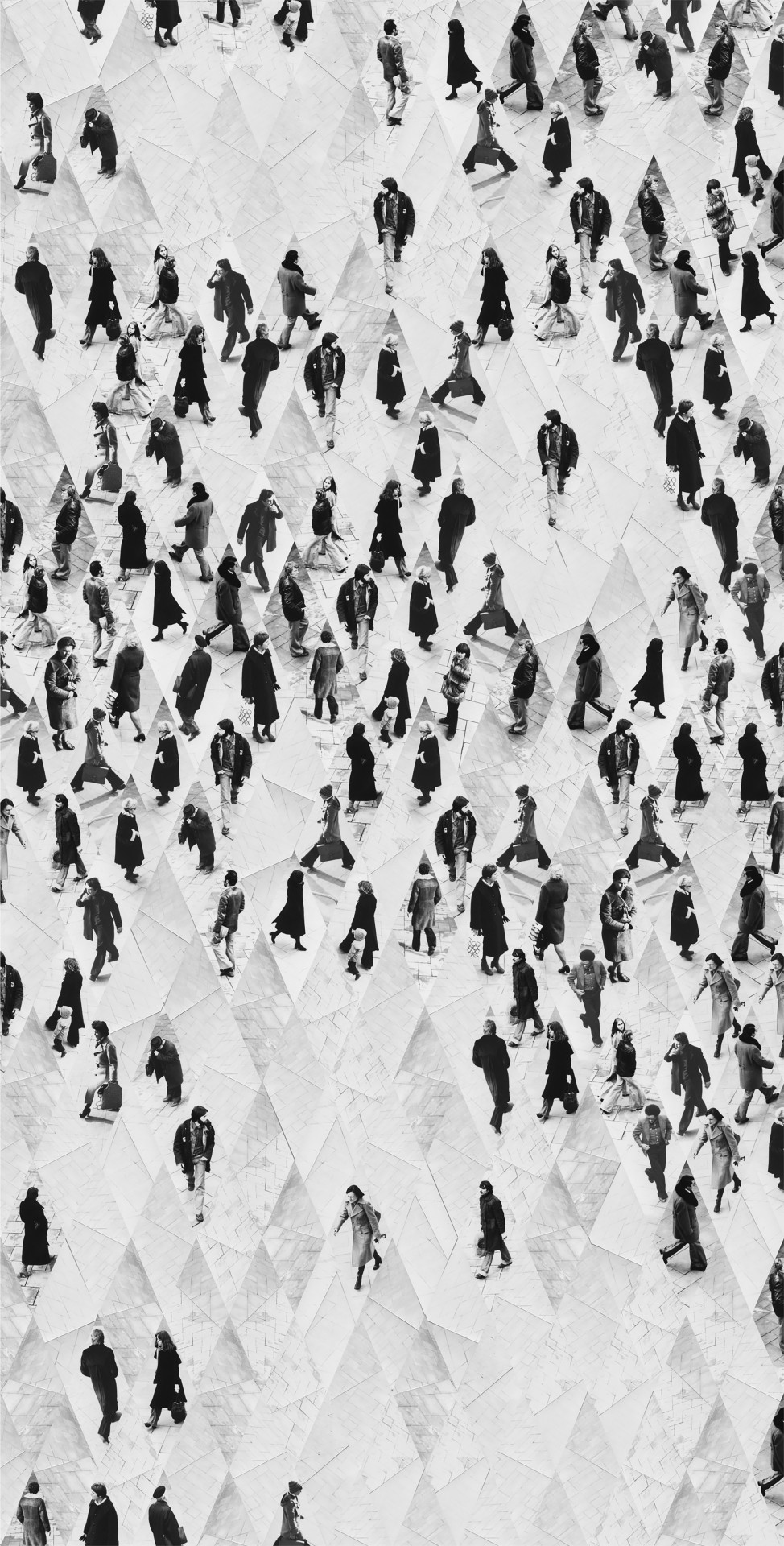
Thomas Bayrle (*1937) is a legend. From February 12 to May 10, 2026, the SCHIRN is presenting a major solo show of the Frankfurt-based artist featuring over fifty works from the last twenty years. Bayrle examines fundamental aspects of modern society in his work. How are religion and society, the individual and the mass, industrially manufactured products and the technical apparatuses of their production connected? Alongside the structures of consumption, work, urbanity, and technology, themes such as mobility, pop and mass culture as well as (substitute) religion all play key roles. The artist explores iconic representations as well as popular works of art history from Michelangelo to Caravaggio, Masaccio, and Claude Monet. On view in this exhibition are paintings and graphic works, sculpture and object art, sound installations and a video work.
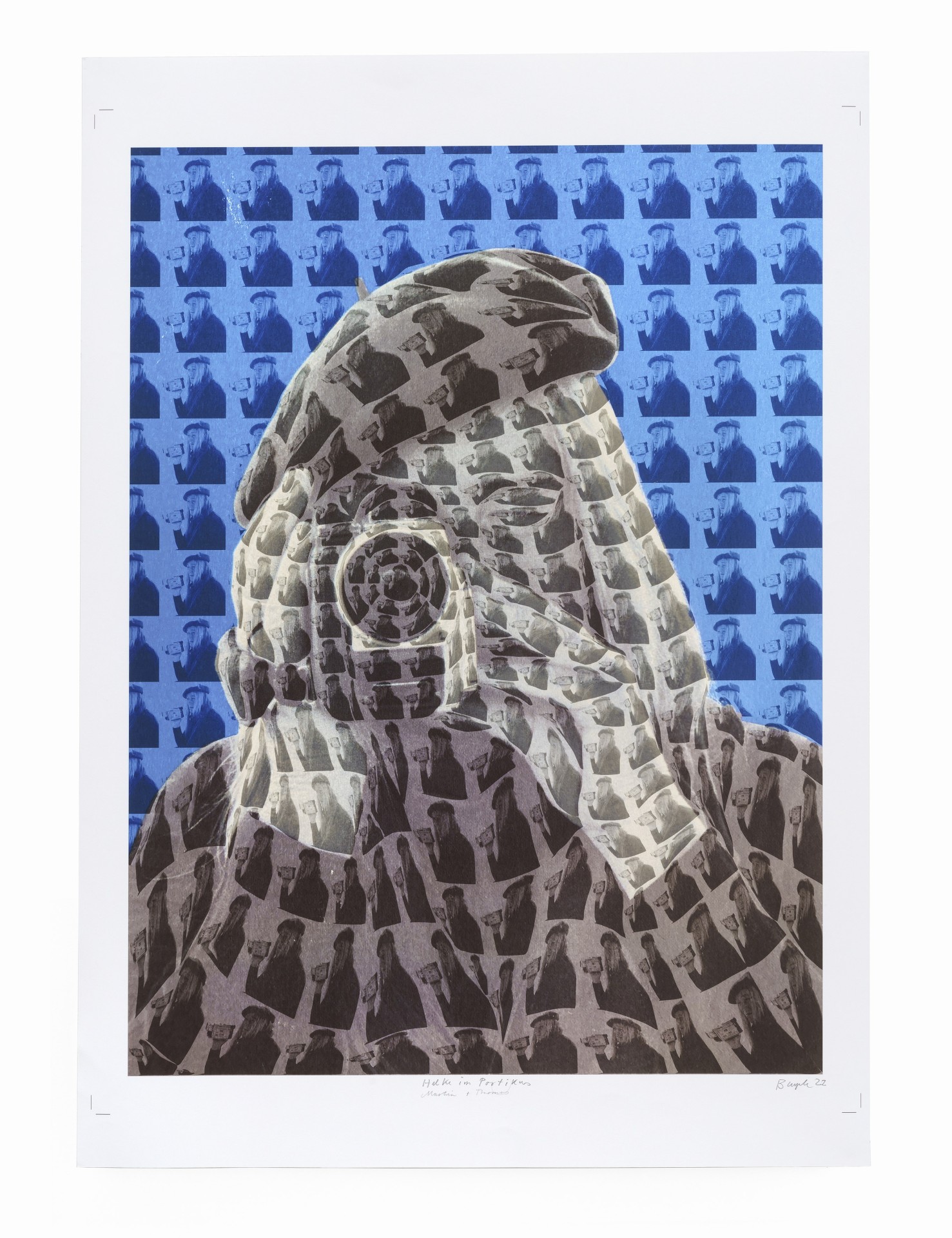
In the 1960s and 1970s, Bayrle laid the innovative groundwork for his characteristic so called “superforms”. Repetition, connection, and interweaving of single elements into an overall image can be found in almost all of Bayrle’s works to this day and this is closely linked to the artist’s biography. Bayrle initially completed an apprenticeship as a machine weaver before turning to commercial and print graphics. He has continued to use these printing techniques both materially and conceptually in his work, thereby paving the way from analog to digital. His works thus engage in a distinctive dialogue with the current exhibition venue of the SCHIRN, the industrial building of the former Dondorf printing factory.
The title of the exhibition recalls Bayrle’s formative time as a professor at the Städelschule from 1975 to 2002 and his influence on a subsequent generation of artists. “Be happy!” was a guiding principle that he often liked to give his students. For Bayrle himself, “Be happy!” was a way of life, both an artistic and a political stance.
Interconnections between architecture and newspaper layout
A film collage by Sunah Choi with previously unpublished footage of the artist Helke Bayrle, who was married to Thomas Bayrle for many years, marks the start of the exhibition.
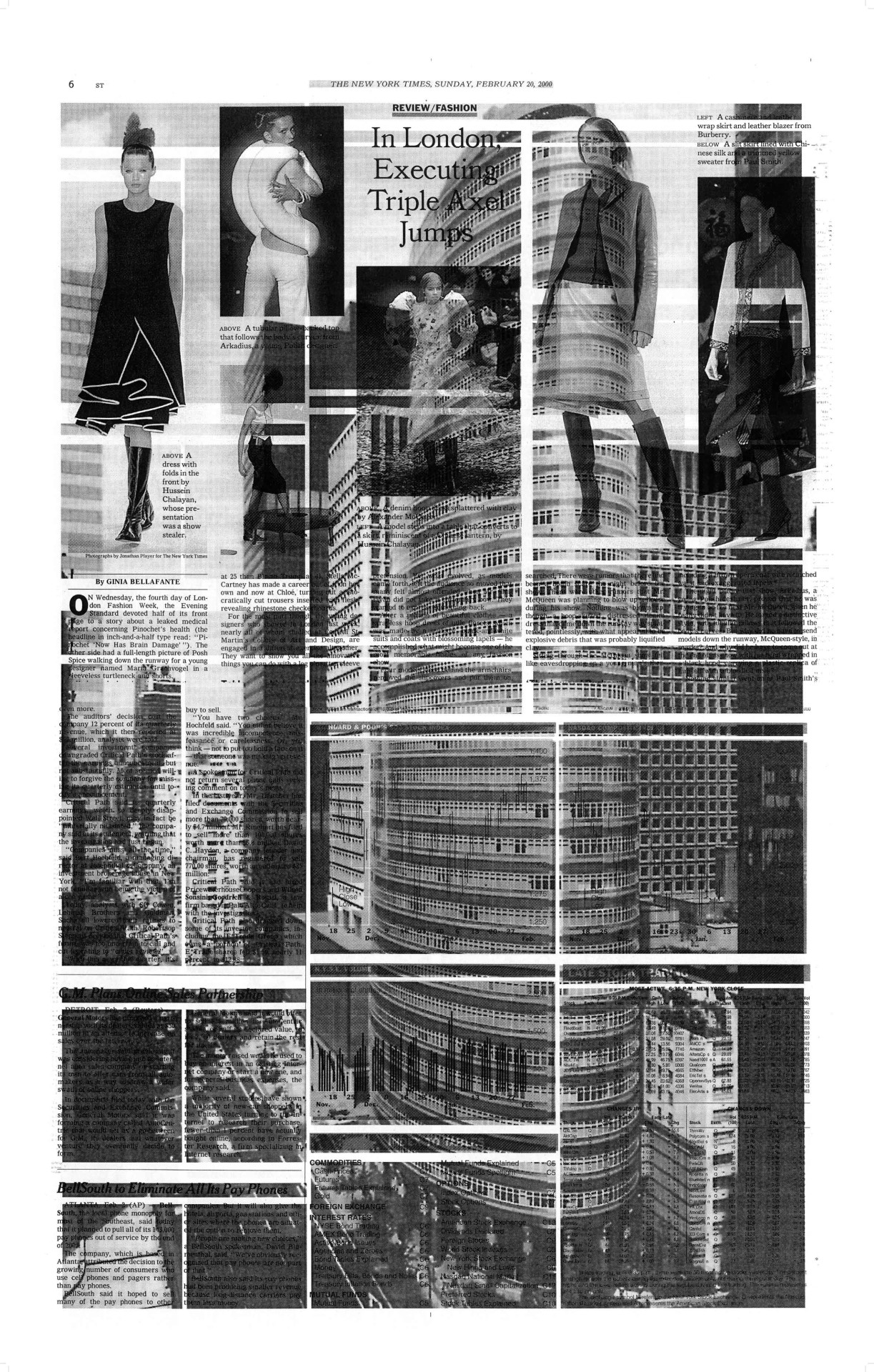
The tour begins with the multi-part work created between 1999 and 2001 on the architecture of Philip Johnson (1906–2005), co-founder of the International Style and architectural postmodernism. The installation consists of the cuboid sculpture “Layout Philip Johnson” (1999) made of wooden slats and ten posters “Philip Johnson / The New York Times” (2001/2025). It may be viewed as a structural comparison of architecture and newspaper layout: In the posters, various newspaper pages from The New York Times are superimposed on one another. The text has thereby become illegible, and the grid of the newspaper page is visible in white horizontal and vertical stripes; it now appears as architecture. Located at the beginning of the exhibition, the work can furthermore be understood as an echo of Bayrle’s activity as a book producer at the publishers Gulliver-Presse, as well as of the exhibition building, the former Dondorf printing house.
A Tribute to Icons of Art
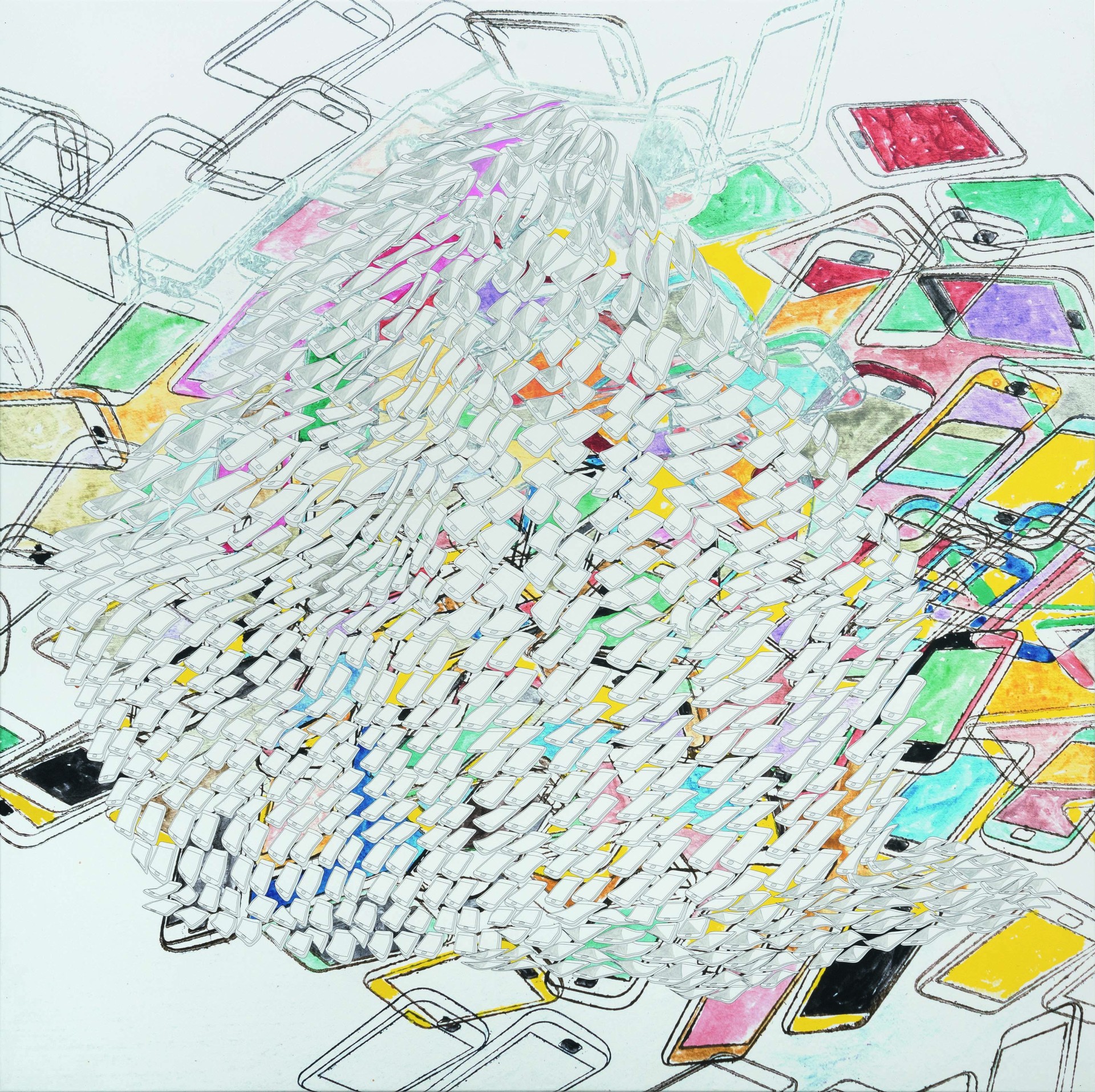
The SCHIRN presents several series in which Bayrle explores iconic works from art history and conventions of Christian imagery. On display are, for instance, three of Bayrle’s adaptations of Caravaggio’s altarpiece “The Inspiration of St. Matthew” (1602), depicting the act of inspiration of the evangelist by the angel. Following his principle of the superform, Bayrle converts the painting into a small grid and fills each of the boxes with the pictogram of an iPhone. These are rotated, scaled, and distorted in such a way that the superform ultimately emerges from the ordered structure. In “Hl. Matthäus trifft Engel” (2015), the reproduction of the Caravaggio painting is displayed on numerous small screens. The viewers snapping away on their smartphones become part of the work and obscure the view of the actual pixelated motif.
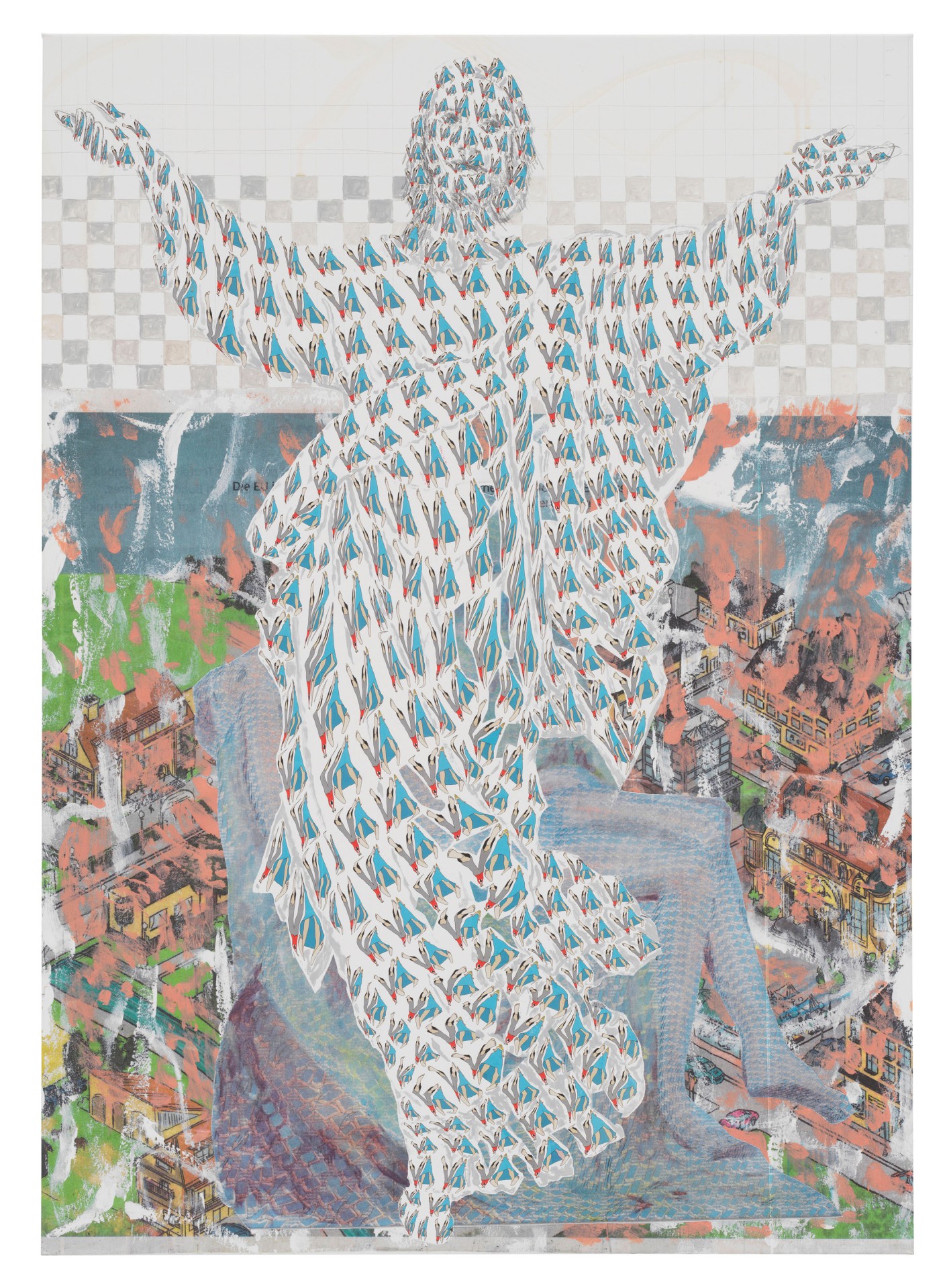
A group of works on the theme of the ascension of Christ does not refer to a specific historical model. Here, too, Bayrle’s characteristic grid underlies the main figure; the small graphics show female figures ascending and male figures descending. The figure of the ascension is superimposed on various collaged backgrounds. In “Ascension I” (2019), a model city is shown dissolving into a newspaper clipping and a checkered grid; in “Ascension” (2019), a photographic collage thematically referencing the pandemic, figures in white protective suits walk across a surface of thermal foil, from which isolated human heads and bodies emerge. In “Ascension VII” (2019), a protective face mask covers the face of the central figure, which is framed by small glowing screens. The inscription “Pfingsten war immer am überzeugendsten wegen dem brennenden Rosenstock” (Pentecost was always the most convincing because of the burning rosebush) is only partially legible.
“Heuhaufen Marmoriert” and “Roll Over Smartfon I” (both 2019) are based on Claude Monet’s famous series of paintings of the “Meules” (haystacks). In this appropriation, Bayrle uses iPhones, some with colorful screens, to build the grain stacks. The year this work was created, one of Monet’s “Meules” paintings sold at auction for the highest price ever realized for a work by the artist. The buyer was art collector and SAP co-founder Hasso Plattner, whose company specializes in software.
In some of his works, Bayrle has referred to Masaccio’s fresco “The Expulsion from the Garden of Eden” (1426) in the Brancacci Chapel in Florence. This early Renaissance masterpiece is emblematic of human awareness of the body, nakedness, and mortality. Bayrle focuses on the central couple and supplements it with contemporary references, from which the bodies of Adam and Eve are formed. In “Brancacci Chapel” (2020), the two figures are filled with two different motifs. Bayrle appropriated these from a South Korean news organization, depicting a group of saluting females and a group of protesting males. In the version “Vertreibung aus dem Paradies” (2020), meanwhile, Adam and Eve can be seen amid a plant-rich environment, as though they had never left the Garden of Eden.
Technological and social changes – gender roles, robots, and smartphones
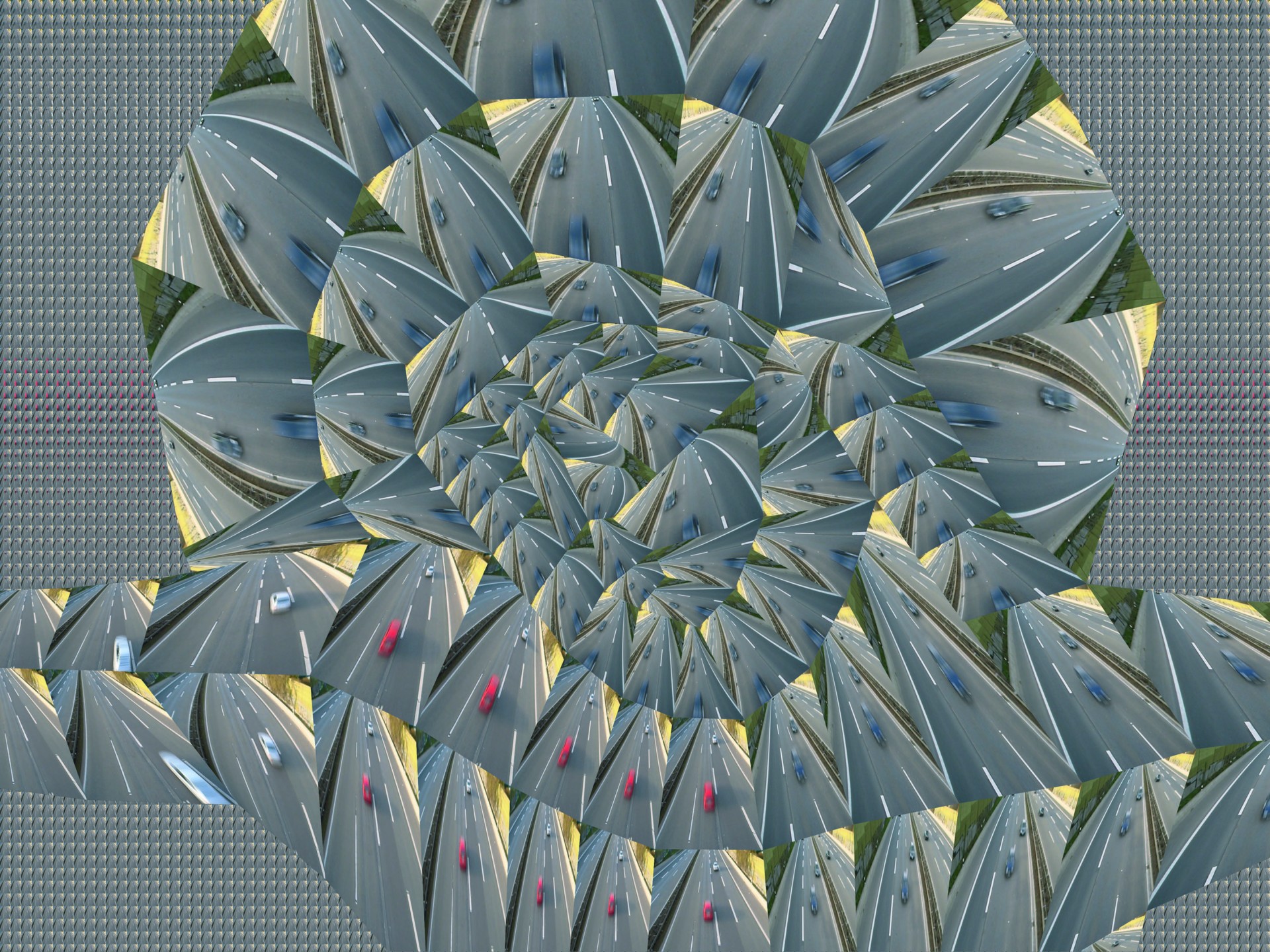
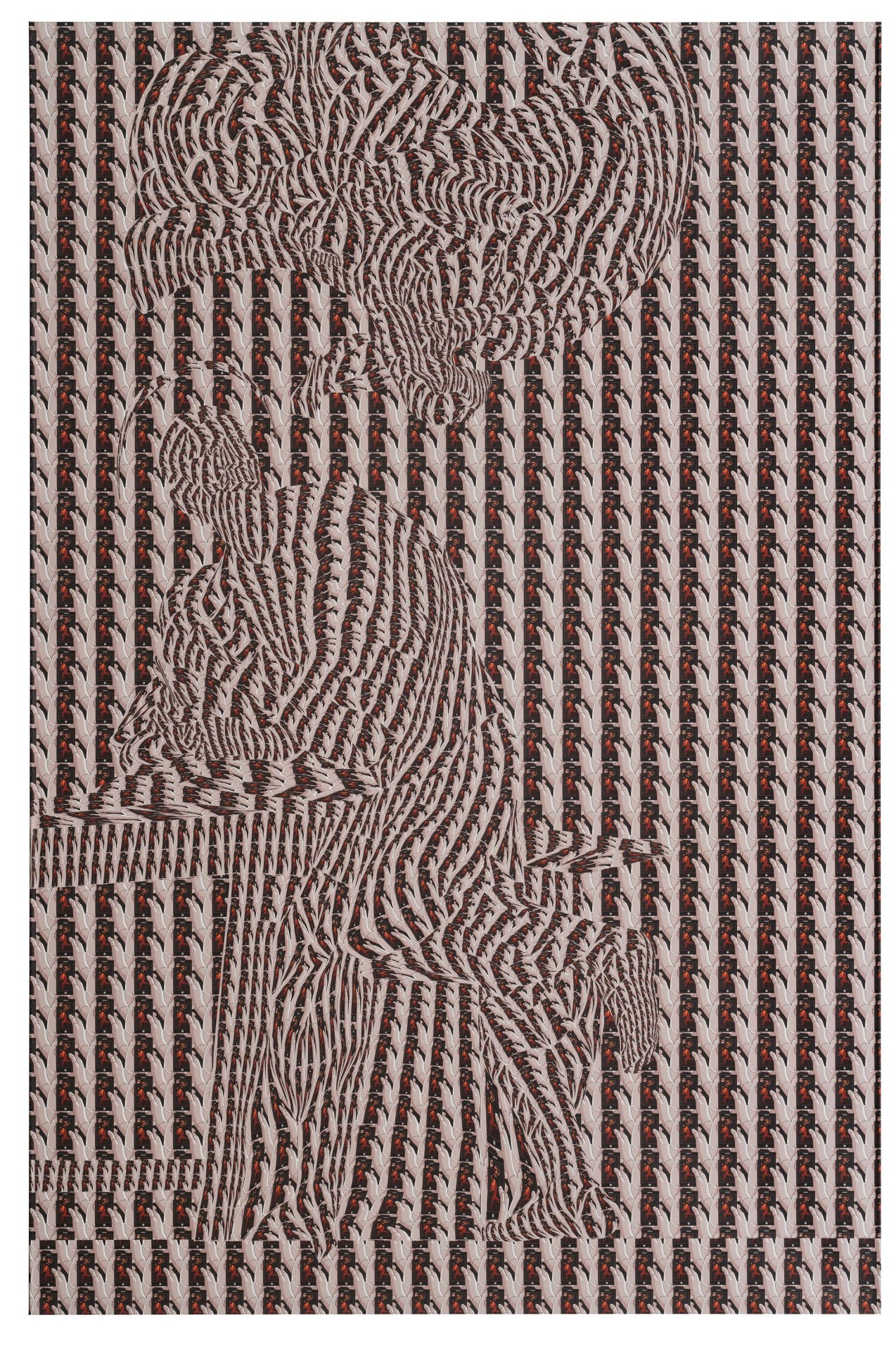
Bayrle combines the Christian pictorial theme of the Pietà (pity) with motifs of technological and social change. Michelangelo’s famous marble sculpture “Pietà” (1499) at Saint Peter’s Basilica in Rome, which shows a seated Mary with the body of her dead son on her lap, serves as a model here. Bayrle’s “Pietà red cars” (2019) consists of a busy, intertwined network of streets with small red cars. “Pietà (Airplane)” (2018) is formed of numerous skulls, more densely arranged in the middle to depict an airplane crossing the group. Since the 1980s, air traffic has increased globally to such an extent that it is having a destructive effect on the planet. The tapestry “iPhone Pietà” (2017) addresses the interconnectedness brought about by the smartphone since the 2010s, which connects man and machine in an unprecedented way. Bayrle had this tapestry produced using an automated loom. In “Pietà (Rising Woman, Falling Man)” (2020), the artist takes the Pietà motif as the starting point for a reflection on changing gender roles in the twenty-first century.
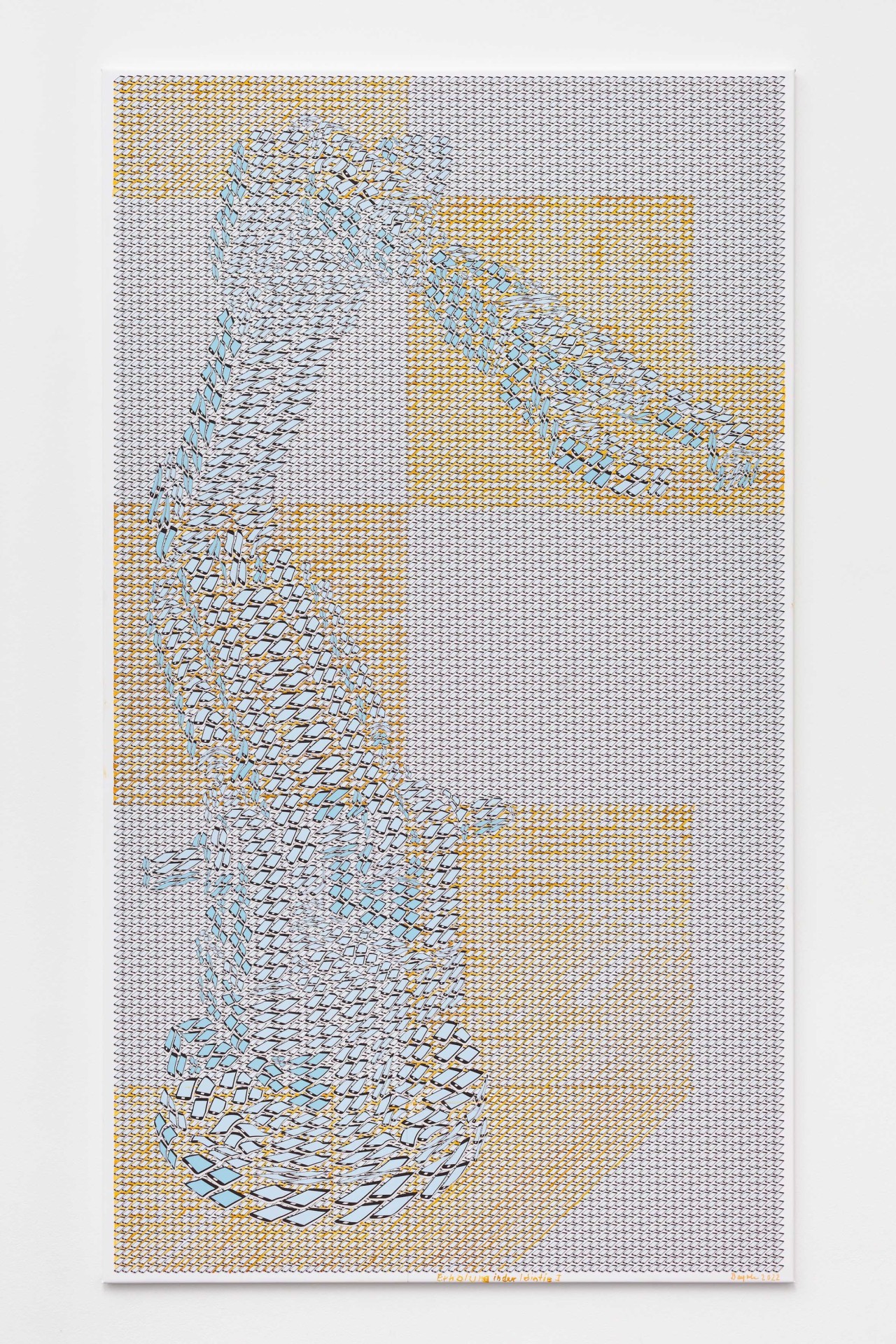
A group of works with humorous titles such as Erholung in der “Idiotie I” and “II” (both 2022), “Non Fungible Tokens ‘Turn Right’” (2022) or “I Fon Salat-Roboter” (2022) focuses on industrial robots, such as those used in the automotive industry. Arranged in the center of the images, the robots are depicted in various stages of their motion sequences. Here again, the images consist of a large number of small iPhones. The robot’s arm and hand maintain an ironic relationship to Bayrle’s artistic working method.
New rhythms of life and aesthetics in mass society
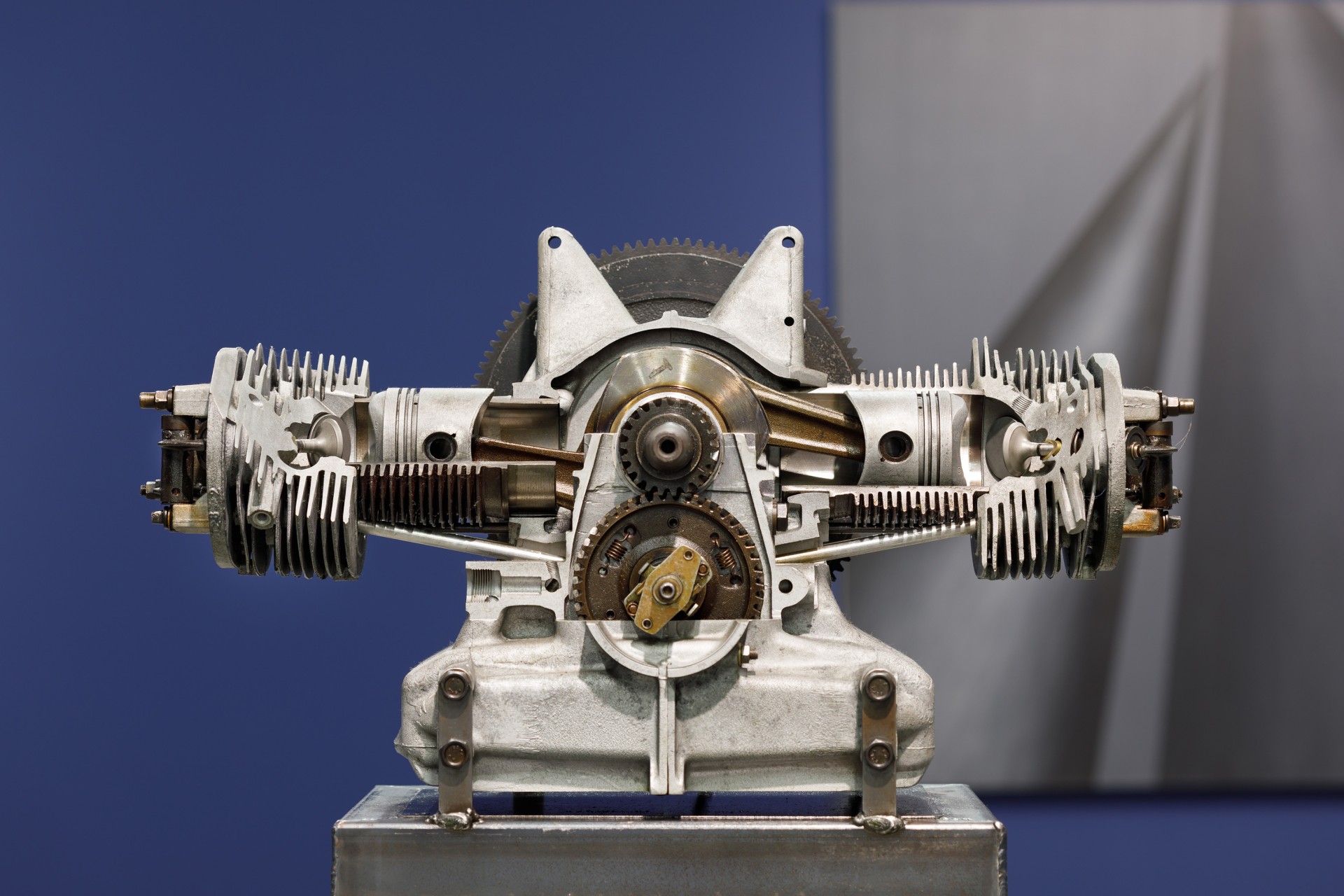
At documenta 13 in Kassel in 2012, Bayrle showed cut-open engines in operation for the first time, thus visualizing not only the aesthetics of machines but also the rhythm of life and the human condition in mass society. He removes car components from their actual functional context and elevates them to the status of sculptures. The exhibition presents “Rosary” (2009) with the motorized movement of an isolated Ford Galaxy windscreen wiper. “Rosaire” (2012) consists of the cut-open engine of a Citroën 2CV, whose pistons move visibly in the cylinders. Both “Rosary” and “Rosaire” are collaborative works with Bernhard Schreiner and are accompanied by a sound loop of persons praying the rosary. During his training as a pattern draughtsman and weaver, Bayrle felt reminded of people praying the rosary by the repetitive, monotonous noise of the machines on the Jacquard looms. The sculpture “Automeditation” (1987/2017) likewise refers to the rosary prayers. It consists of four car tires stacked on top of one another with an excerpt from the Latin prayer Ave Maria inscribed on the outside.
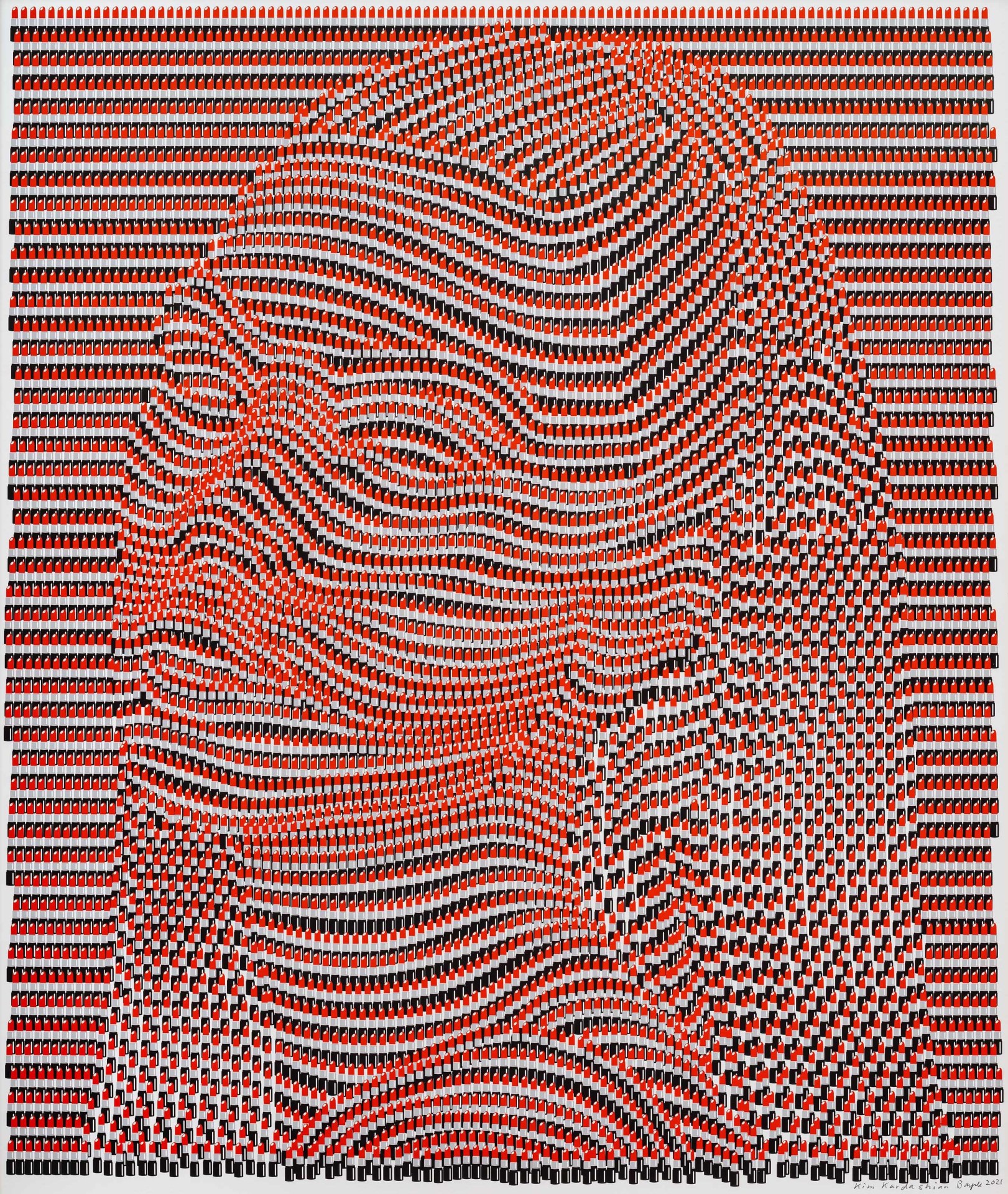
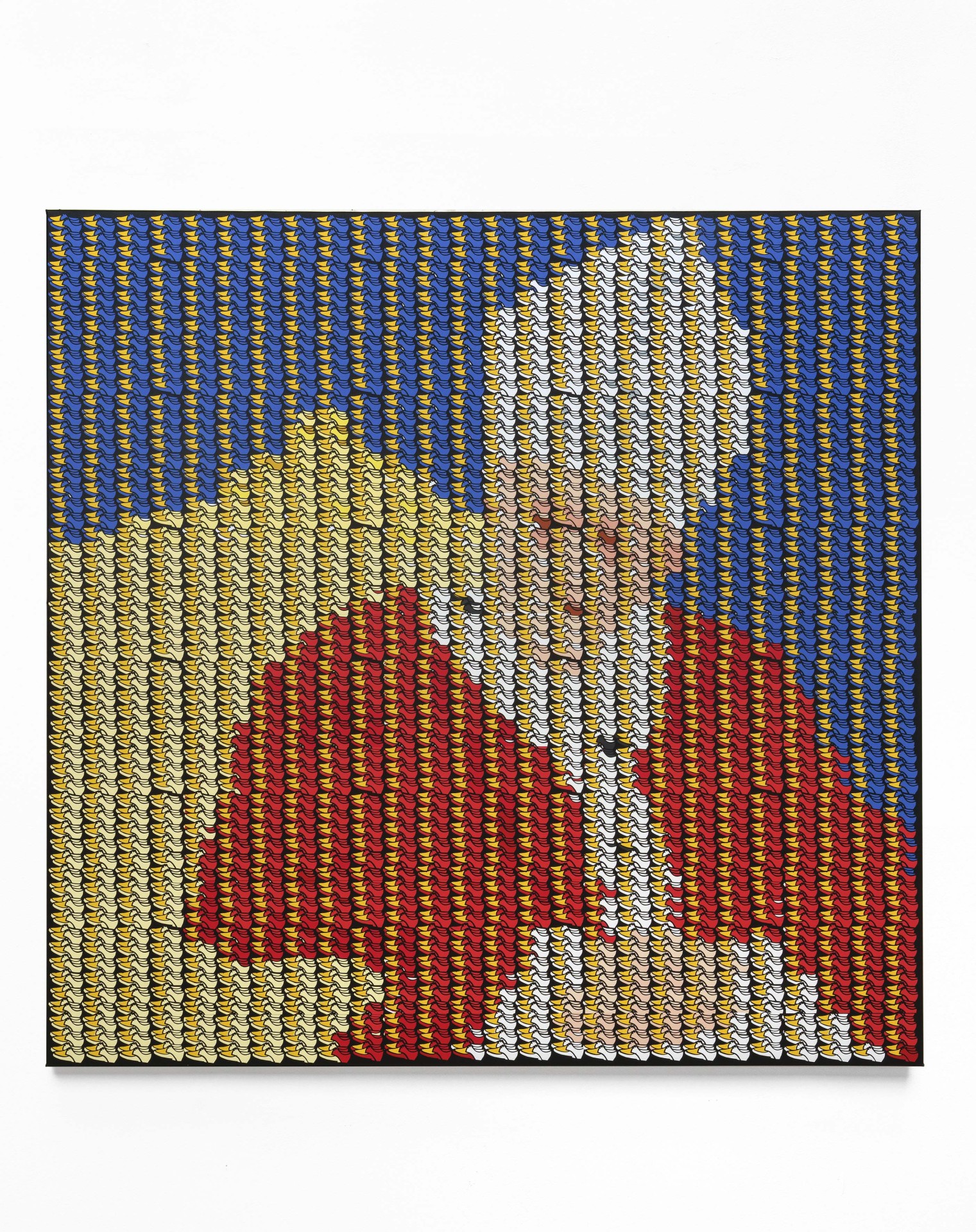
The exhibition closes with depictions of two popular figures. The portraits “Kim Kardashian XII” and “XIII” (both 2021) show the contemporary media icon composed of many small red lipsticks. Most of Kardashian’s income stems from the fashion and beauty industry. Bayrle uses formal references to create an analogy to Jan Vermeer’s popular painting “The Girl with the Pearl Earring” (1655). It does not show a specific person, but is a so-called tronie, a portrait of an imaginary figure. “Pope I” and “Pope II” (both 2021), depictions of popes with their liturgical headgear, the miter, likewise resemble a conventional ecclesiastical representative rather than a specific person. The composition is made up of many differently colored small shoes, a reference to Pope Benedict XVI’s distinctive red loafers.