

About Time: With Choreographer Deborah Hay
09/10/2026
12 min reading time

In the early 1960s she danced in the Merce Cunningham company, and she later upended the rules of dance and founded a radically new choreographic practice: Deborah Hay is one of the key figures of US-American postmodern dance. In September, she is guesting at Mousonturm. We spoke with her ahead of the event.
Deborah Hay, born in 1941 in Brooklyn, is one of the decisive figures in postmodern dance in the US. In the early 1960s, she danced in the Merce Cunningham company, and a little later became a member of the Judson Dance Theater, that New York group that completely upended the rules of dance by incorporating everyday movements, chance structures, and new forms of interaction between the dancers. Hay initially developed her own work with professional dancers and later with completely inexperienced newcomers. However, she soon abandoned that approach. In 1970, she left New York and moved to Vermont, where she radically focused her choreographic practice on her own body. Since 1976 she has also lived in Austin, Texas.
In her solo works, she does not specify movement sequences for the dancers but gives them questions and tasks, out of which the respective performance evolves. Hay has written several books on her methods and, among others, has won the Doris Duke Artist Award.
Today, Deborah Hay does not wish to answer any questions relating to her much-quoted career, her innovative and, in their day, truly radical new paths in contemporary dance. Only under that condition did she agree to talk, and we therefore concentrate firmly on the here and now – which does not mean that time, and the routes it has taken, cannot play a role.
It is a very hot day. Deborah Hay is in Vermont, where she spends the summer months.
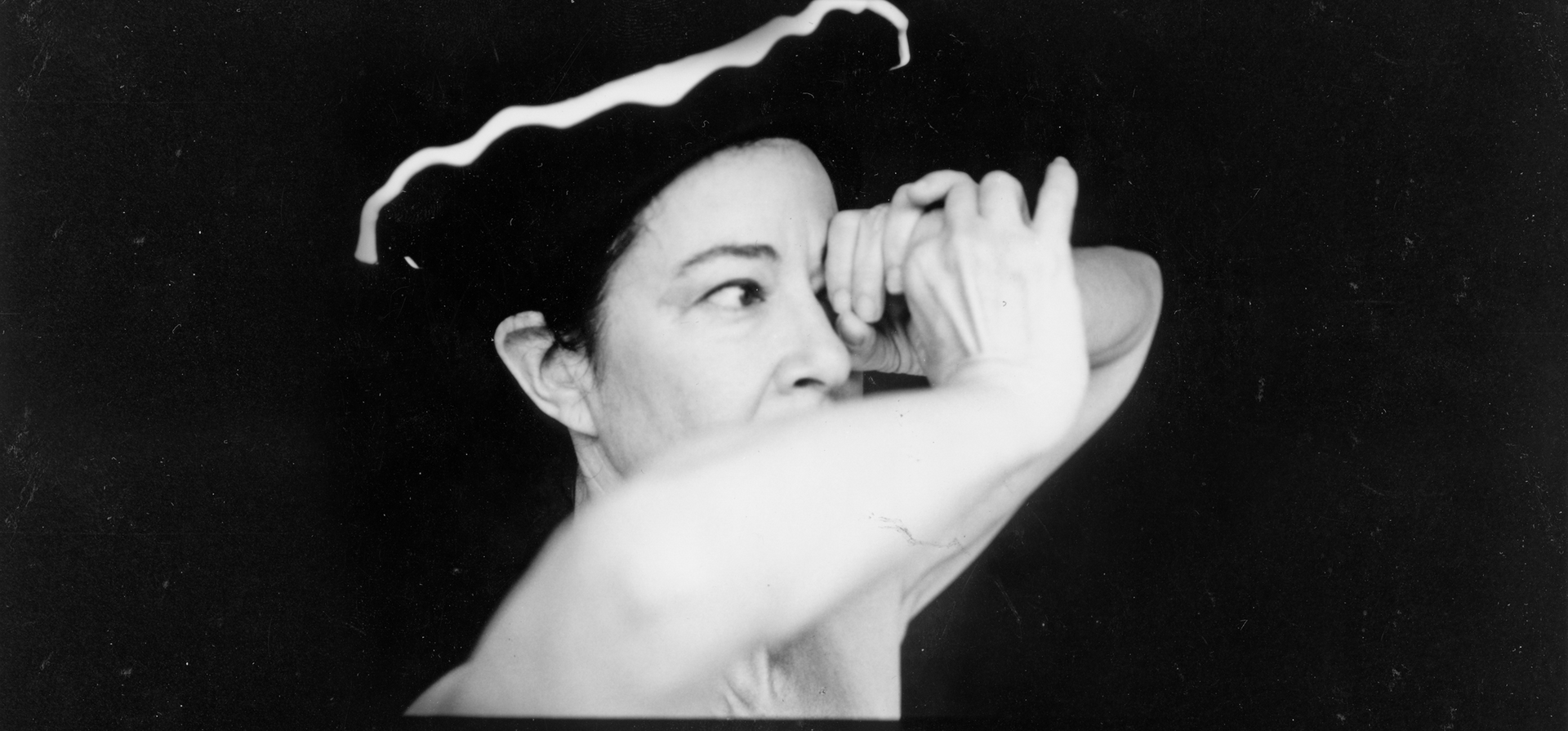

So, Deborah Hay, let’s talk about the here and now. It’s very hot at the moment, as good as everywhere in Europe and in the USA. Does weather actually play any role in your work? After all, it’s very direct, physical work.
Deborah Hay
I don’t think so. But maybe politics does. Here in Vermont there’s a truly healthy political atmosphere by direct comparison with Texas, where I spend the winter. To that extent, the politics of the respective place have had more influence on me than anything else, but I don’t really believe that either. I still dance every day, irrespective of where I happen to be.
And your dancing revolves around a question which has formed in your body. At least, it was for a long time the core of your work. Since you have now posed and worked through so many questions: Is there a firm starting point now for the dancing, for the questioning, each day, or does it repeatedly change?
Deborah Hay
Now that’s a good question. Because I have now spent a good 50 years asking questions of my whole body. In order to get out of my head. They were questions that arose while I was dancing. So I used the questions to identify my own feelings. Where I am, what I need… These questions resulted from the experience of dancing. And where I am now, after over 50 years and with some 21 or 22 questions asked, I perhaps don’t need these questions any longer. They are now in my body. I carry them around with me. They are simply there. Until recently, I said: I practice dance – or: Dance is my practice. Now I say: I dance.


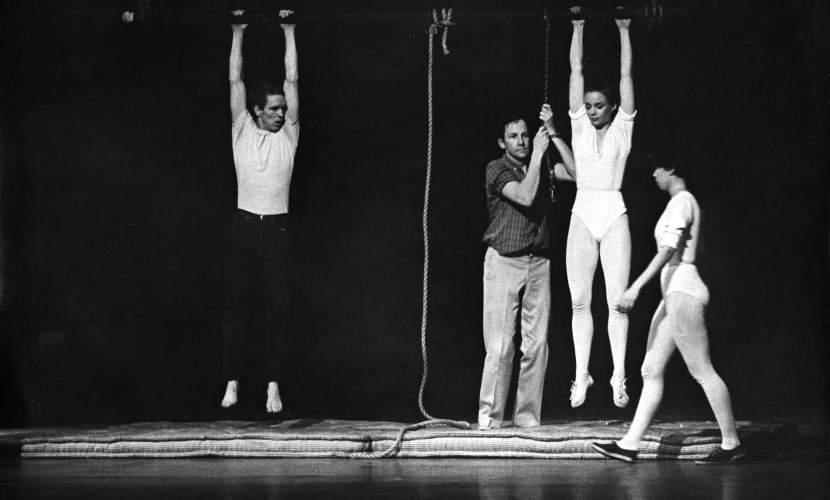
Meaning there are basically no new questions left?
Deborah Hay
These questions are so much a part of me. They have changed my life, they have changed my dancing. Alongside all the other parts of me – you know, going to the store at 4 p.m., doing the laundry, and so forth – my answers exist directly next to these questions of everyday life. I don’t just want to ask questions, I also want to get something out of it! I want answers! And they now exist in a logical sequence that takes me from point A to B. But all of that is in my body. There are still so many unknown things for which I have to make space.
And should we construe creating that space as the starting point of your work?
Deborah Hay
I’m just back from Athens, where I performed a piece dating from 2010. When I was preparing things, it was all immediately there, present. In my body. I had not danced it at all in the intervening years. I removed all images and questions and simply danced it. See what I mean? It felt like a completely different piece. And yet there was this sequence of material that my body simply knew. I didn’t need to think about it for one moment. My body knew what to do … I knew it. But I could now dance it from a completely different point. And that point from where I danced it was not a question, but a challenge. The challenge to remove myself from space and time. That was so liberating.
I can well imagine.
Deborah Hay
And now comes the difficult part: I can’t make my dances. I knew beforehand that I cannot make my dances. They are impossible to make, they demand of me that I handle everything, and I do not have the time to do everything.
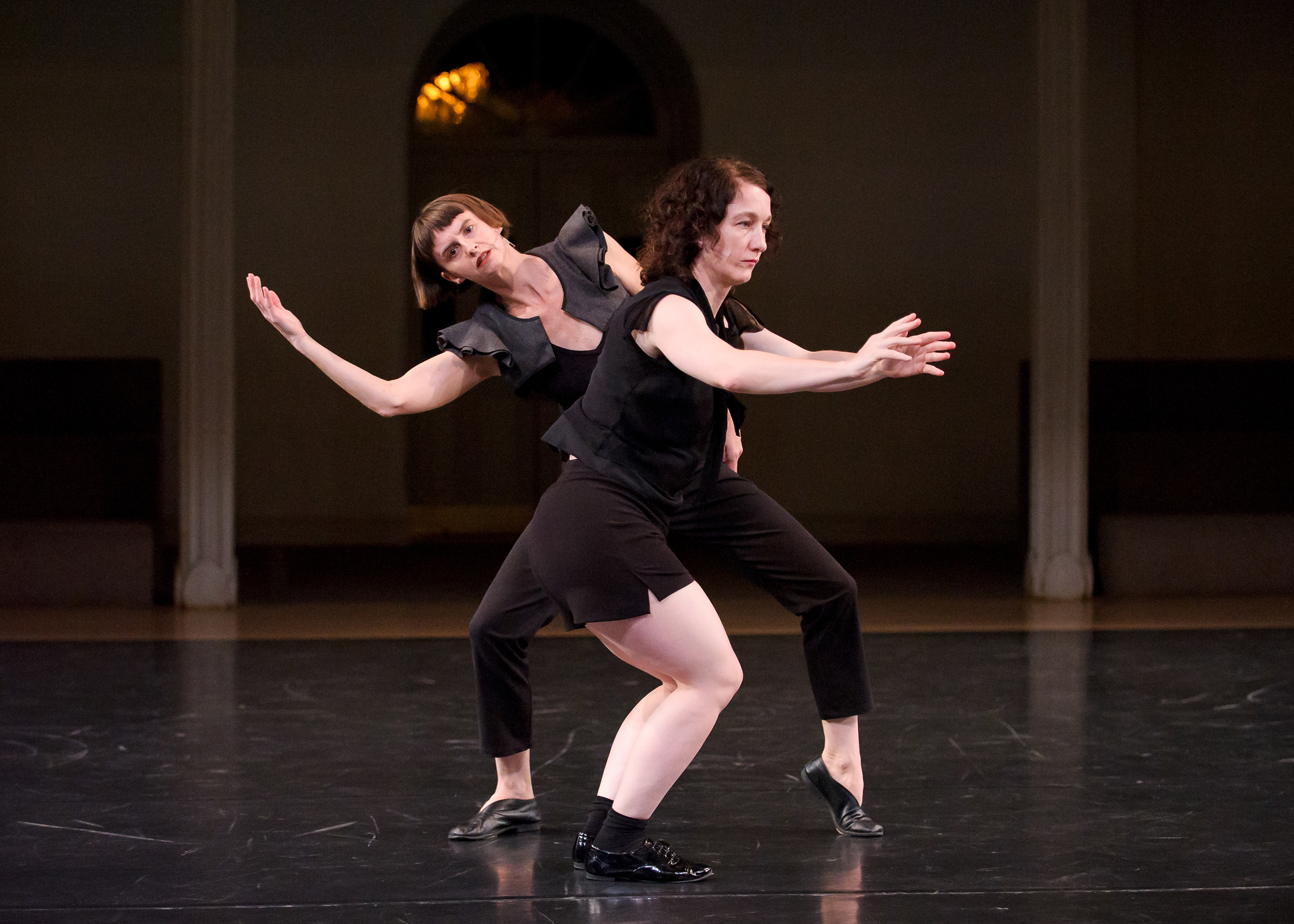
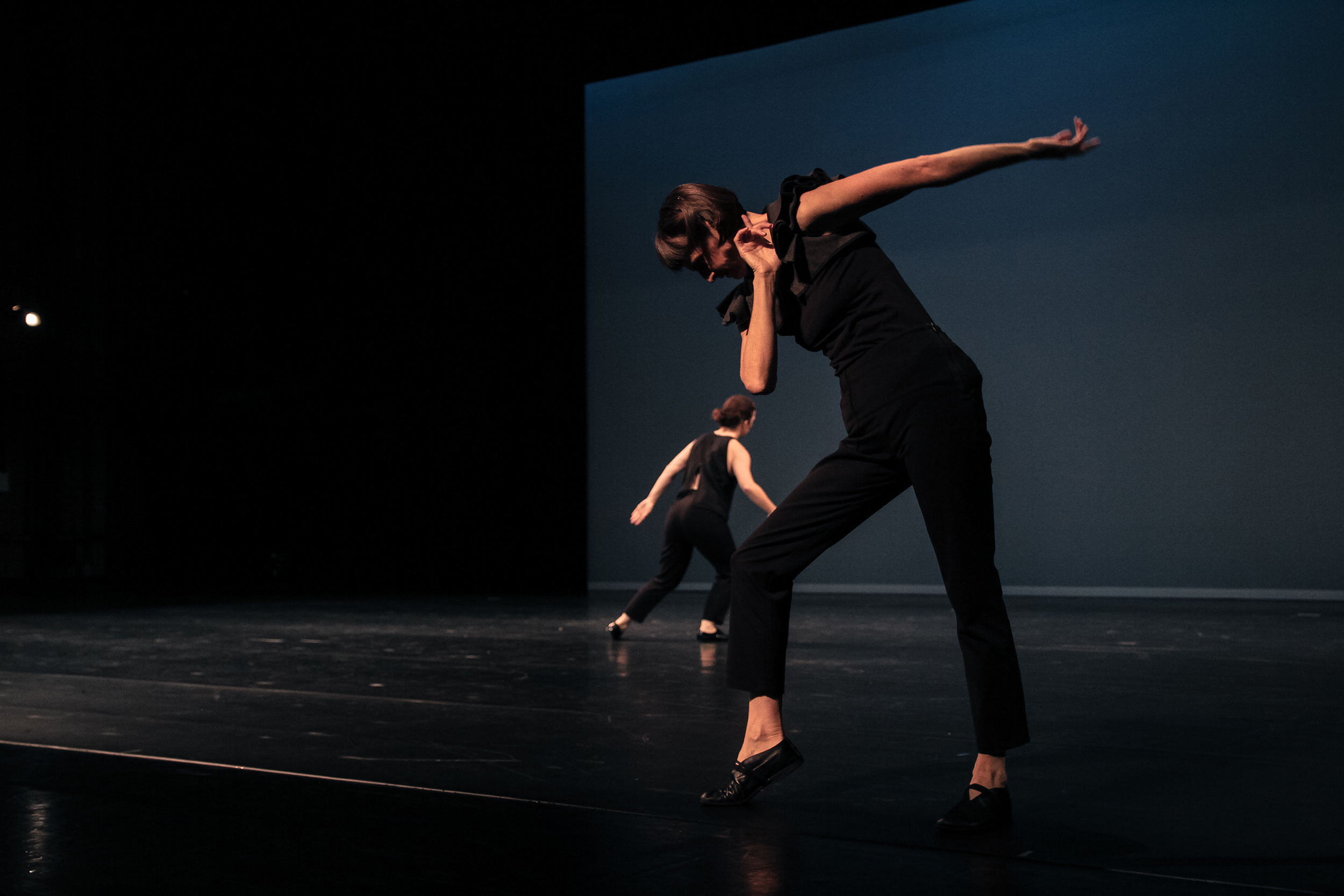
You mean realizing a particular piece always functions as feeling your way into it, but can never be achieved?
Deborah Hay
It’s not even a matter of feeling my way into it. I know that I cannot make my dances as there is no object. There is no story. There is no music for me to follow, there is no… and the heart of my work is the attention that I have been paying to my cellular body since 1970, the intelligence of the entire body, the investment in the potential of awareness. I know that I cannot make it. It is impossible. But I direct my attention to it all the same. It is important enough to me to accept it. I am optimistic enough as regards life.
What do you expect of the dancers you work with?
Deborah Hay
The same willingness to play it through. I do not teach workshops in the usual sense. If I work with professional dancers, then the only ones who want to work with me are those who are willing to go to the same places I go to, with the demands I make: You will not succeed, you must give up any wish to succeed. You cannot give up the wish to want to succeed; your whole life relies on wanting to succeed. And all the same … so, once again: generating this tension of the impossible. I don’t care, but I want it all the same. (laughs)
On the one hand, you have very clear ideas of a piece, while on the other, you leave the interpretation to the dancers. How does that work in practice? Does that freedom stem from the openness of the individual performance?
Deborah Hay
Openness is not a word I use. What I do when working with professional dancers is I give them tools. Tools with which to handle the impossible. “It’s not a big deal!” That’s something I often say. Time passes. It’s not a big deal, you know. I say to the dancers: Be a pig. Don’t hold yourself back.
This space we are in, this studio, it’s not empty. We wouldn’t be here if it was empty. Stuff like that.
So I give them tools that they can focus on. So that they remain interested in this body, in this studio, with me.
What can you dance today that would have been impossible for you aged 40?
Deborah Hay
Hmm. That’s an amusing question. I think there are things that I can’t do that I did when I was forty. Put differently: I no longer jump. I no longer run around.
That’s exactly why I turned the question round. Because as one grows older, so one more often gets asked about the limitations than about what one can perhaps do better.
Deborah hay
Yes, that’s true. I wouldn’t have had the grasp for it. I wouldn’t have engaged with it. I wouldn’t have engaged with it so profoundly.
The awareness of time, of the passage of time, seems to be at the core of your work. Has your relationship to time changed in recent years or decades?
Deborah hay
Yes, I’m getting older; I think about being at the end of my life. That’s the last chapter. I think about dying much more than I did five years ago. But I don’t ponder it too much; I think most older people don’t – it’s certainly not very healthy to constantly think about it. But at the same time, I’m very open with it.
Has that changed my work? I don’t think so.
My dances revolve around how I survive. I have been using this term for a while now. Because, well, as far as I can judge, the world is going to the dogs. And if I did not have dance, then – or so I believe – I would be a fairly melancholic person.
I mean, the way I told you about it is really the closest to my heart. But I also think that for me it’s a form of politics. The focus is not on what it’s about, it’s not on how I dance, it’s not about why I dance; it’s about the fact that I dance. And for me, precisely that is the political act.

In September you’ll be guesting at the Mousonturm in Frankfurt. “Performance Club – The Lesser Told Story” lasts exactly one hour. You dance for 20 minutes and the rest of the time your audience is invited to spend the time silently as they want. Does it still surprise you to see what the audience does with that freedom?
Deborah Hay
I think you need to rephrase that kind of question. It is a whole lot more than the idea that I dance, and the audience then takes over. I first performed the piece in Austin. The idea was: I perform for ten days in a row. I can’t find a theater for it. I can’t afford to perform for ten days. I have a friend who has a beautiful studio, and 25 people dropped by, and it was a piece lasting about 20 minutes.
But I didn’t want the people to simply come and watch me. I saw a library before my mind’s eye, where silence ruled, and people sit at their desks and go about their research. That complete picture. And I thought: Okay, this event will last exactly one hour. I will perform for 20 minutes, and a bell will sound at the end of the 20 minutes, and directly afterward the people who have come to the event have the remaining time until the hour is up in which to write, sleep, dance, paint; it is their own research on what the presence of a live performance did to them, how they were influenced by the presence of a live performance.
And silence prevails; no one speaks, nothing like that. It might have nothing to do with my person, or it might inspire a poem or whatever. Who knows.
And then, at the end of the hour, everything is suddenly over. So it really is about waking up and noticing what happens to us in the presence of a live performance – something that most of us do not have the time to pay any attention to. If I go to a performance, I clap and then go out to eat with friends. I do not have the time to perceive how this has an effect on me, what the effect is.
Meaning everybody can really do whatever they want, but it has to be done in silence. Don’t impose your own research on someone else. It is so beautiful in this space. In this studio. If everyone completely quietly … for me, that is a magic moment. A collective, shared moment.
And you yourself, how do you spend the rest of the time until the hour is up?
Deborah Hay
I dance, and when the 20 minutes are up, I write.
