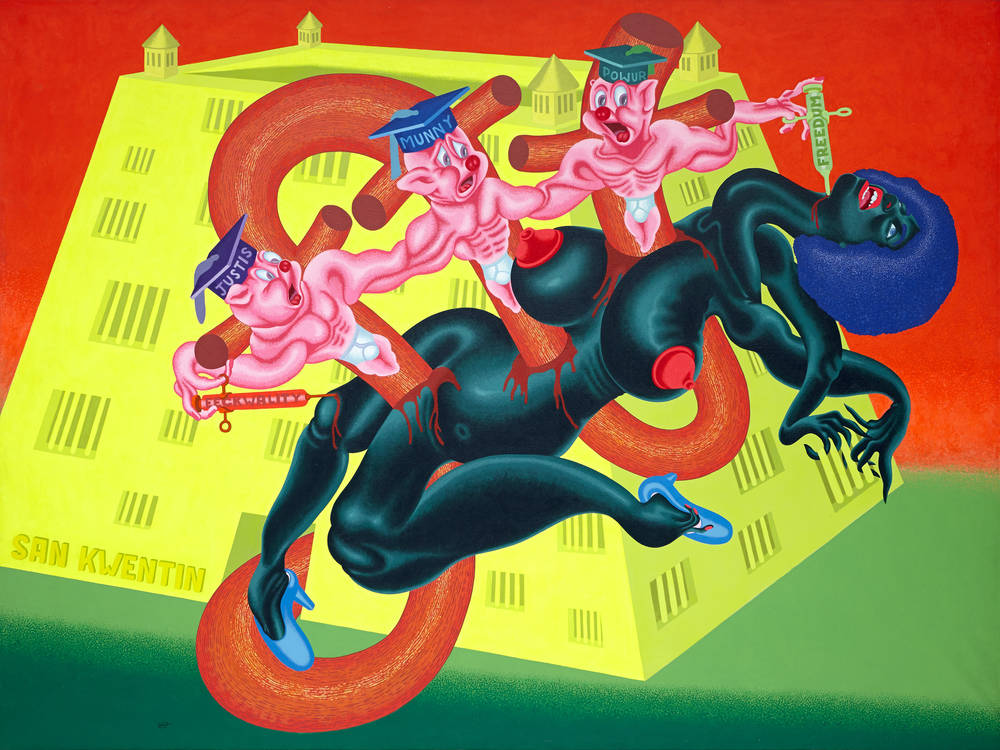
Erik Parker’s artworks are brash, colorful, made up of small parts. They quote the more or less secret codes of the various subcultures. Parker, born in 1968, studied at the University of Texas in Austin at the time when Peter Saul was a professor there. Saul and Parker, who now lives in Brooklyn, never lost sight of each other down through the years. Which is why Parker traveled into town for the opening of Saul’s retrospective at Schirn Kunsthalle. We meet for the interview in Café Schirn. Erik Parker wears sneakers, Bermudas and a dark jeans shirt and I could well imagine him on a skateboard. He needs little time to pore over the menu and swiftly orders an “ice coffee with whipped cream”, and the interview begins.
Schirn Magazin: You were born in Stuttgart. How did that come about?
Erik Parker: My dad was at pilot school there. My mother, who is British, gave birth to me in a German hospital. My dad wanted to become a pilot so he could serve in the Vietnam War. He did three tours there, and luckily he returned safe and sound each time. By the time we left Germany I was three years old.
Is this your first time back in Germany since your childhood?
No, I’ve been back quite a few times. I like being in Germany and I like to view the exhibitions. The curators here are a whole lot more courageous than in the States; take more risks: It’s very inspiring.
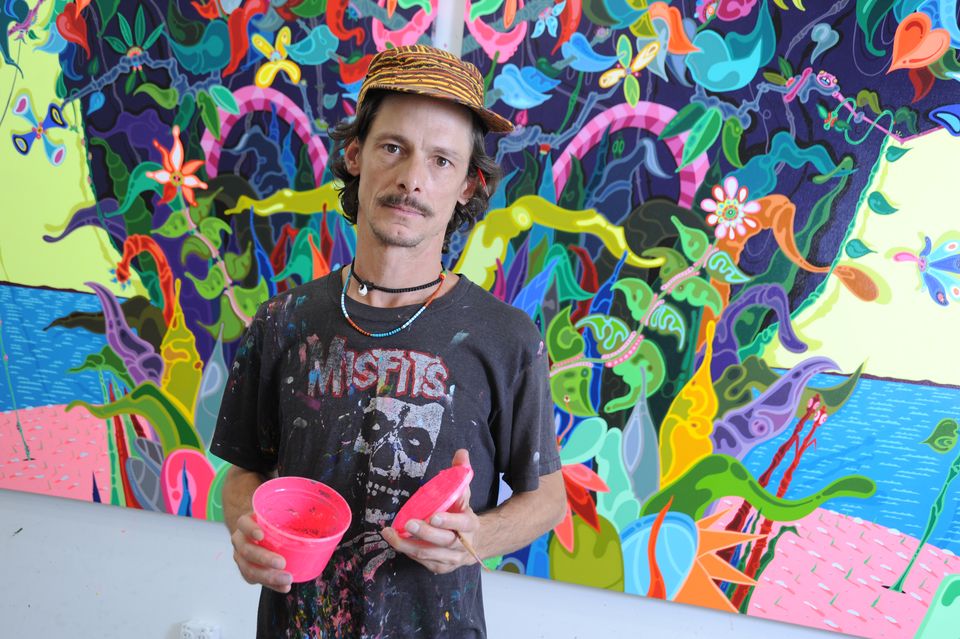
Erik Parker, Public Domain via Flattmag
Which Frankfurt museums do you like?
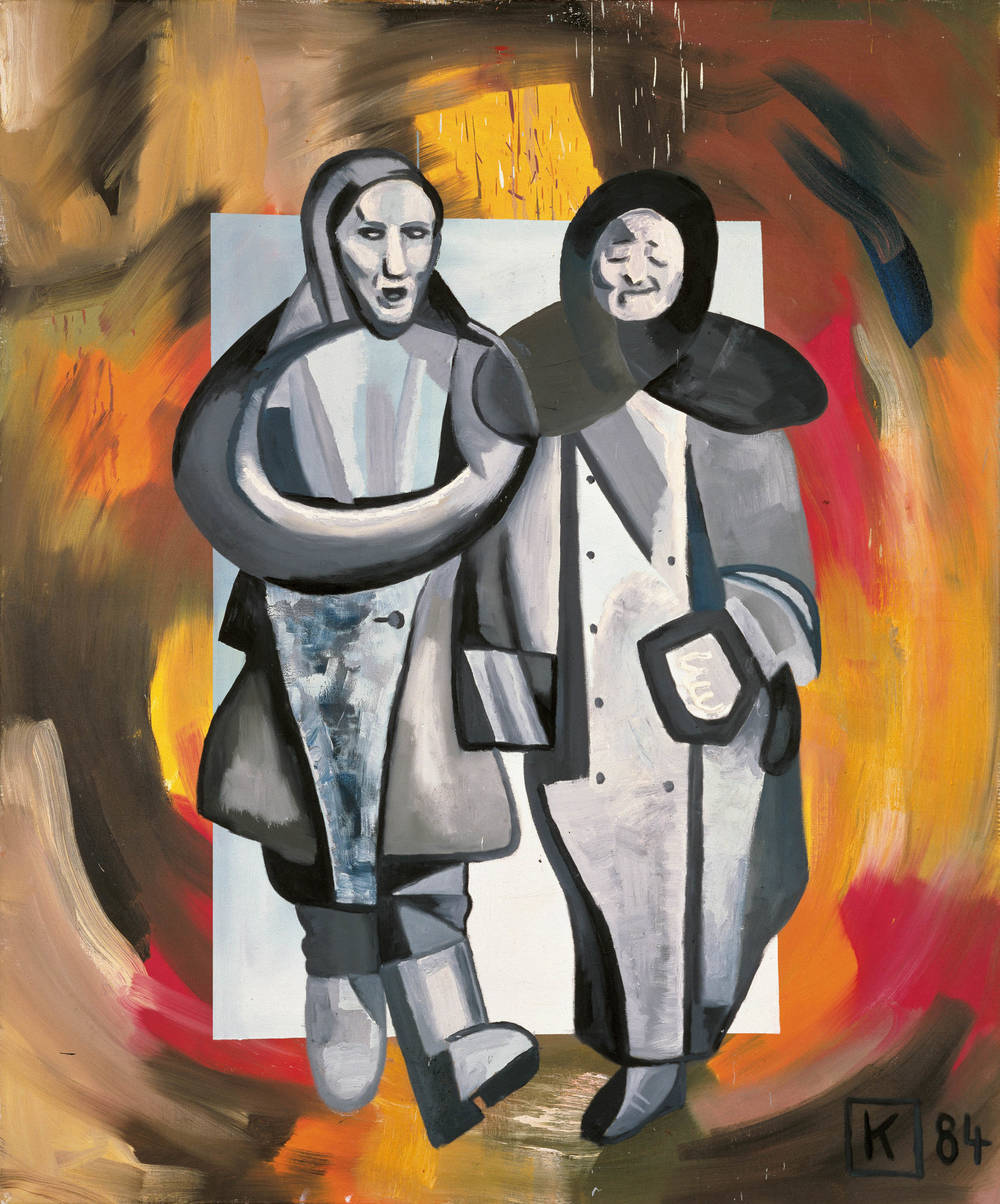
I love the Contemporary Art section in the Städel. There are really crazy things on display there, the exhibition is marvelously diverse. I was just there again and I discovered the paintings by Bettina von Arnim from the 1980s. And then there are the great pieces by Martin Kippenberger or Dieter Roth. But I also love the Museum für Moderne Kunst as I’m really taken by the building’s architecture.
You studied at the University of Texas in Austin while Peter Saul was teaching there. How did he inspire your work as an artist?
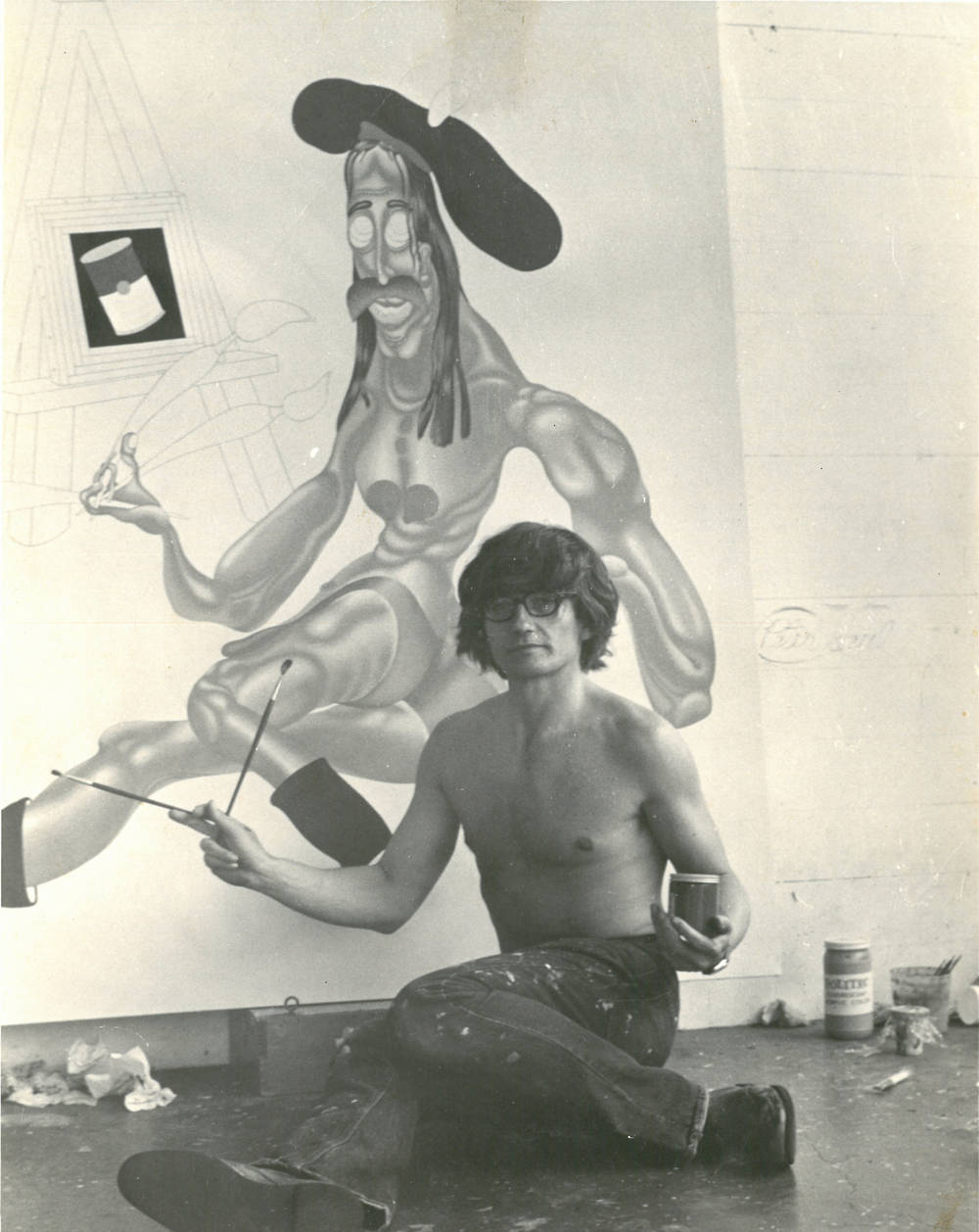
I’d never heard of him before. I was simply a Punkrock kid fresh from high school, from a humble background, and wanted to learn to paint. The fact that I had even started drawing back then was solely because I really raved about the comics in MAD magazine. And then I turned up at university and got to know a professor who also cited MAD as his main inspiration. That fascinated me: Peter came into class for half an hour and then went back to his studio to work. I was captivated – by his way of painting and by his way of living. For me, the fact that our paths crossed was a huge stroke of good fortune.
What was Peter Saul like as a teacher?
I learned from him that you have to follow your own vision of art and not some norm or other. Peter wasn’t someone who explained to his students what is good and what is bad. He never gave tips like: Paint a little more yellow there, rework that patch again. Peter seldom talked with us about painting anyway; it was usually all about everyday things. His classes were populated only by students who really wanted to work on their art. He had a trick to achieving that: At the beginning of each course he simply gave everyone top grades. Anyone who didn’t want to didn’t have to show up again.
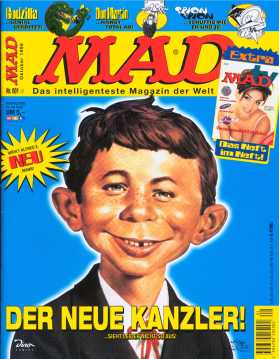
Mad Magazin, Public Domain via Mad Magazin Deutschland
Do Pop and subcultures play a similarly important role in your art to that they play in Peter Saul’s oeuvre?
I was always attracted by the counter-cultures: Skateboarding, Punk rock, HipHop. But today the subcultures have disappeared, the Internet sucks it all up. If you really want to start a subculture today, then you need to go offline.
Isn’t there a completely new counter-culture arising at this very moment in the States following Donald Trump’s election?
Sure, there are fierce protests, and lots of artists take part in them. I myself don’t because I am too paranoid for that. But in the art scene I guess there’s no one who supports the Trump administration.
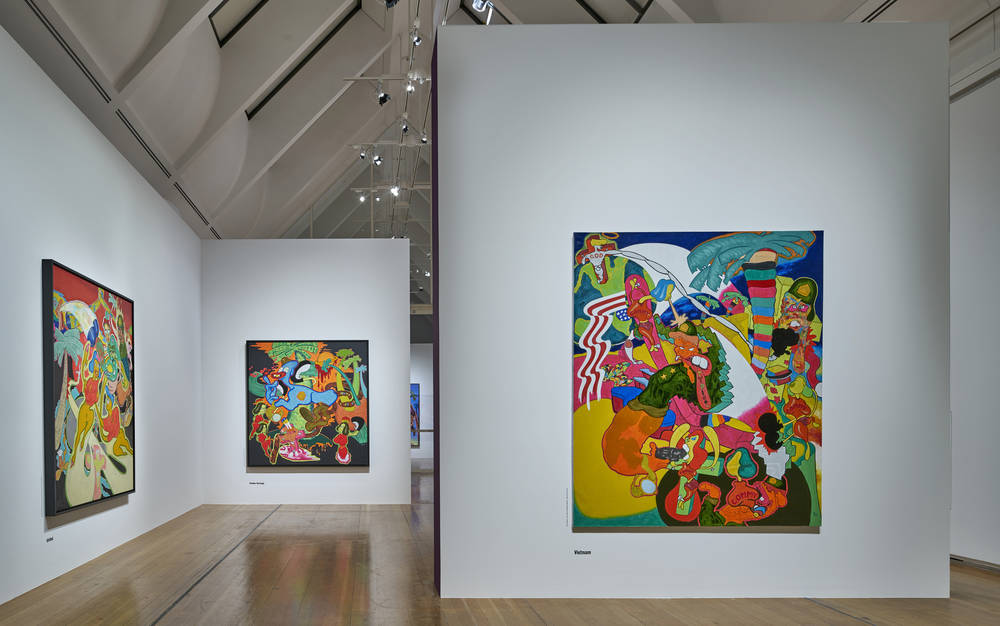
Why do you think Peter Saul has always remained an “artist’s artist”? Why did he never have a major breakthrough?
Is that so? Interest in his work has rocketed over the last five years. And I think that trend will continue. Of course, Peter’s art is very idiosyncratic, very in your face and that’s hard to digest. No doubt it also played a role that his paintings have tended to be acquired by private collectors so for a long time they were not on public show. And then suddenly they started cropping up on social media platforms such as Instagram. I’m certain really good art can’t be kept secret.
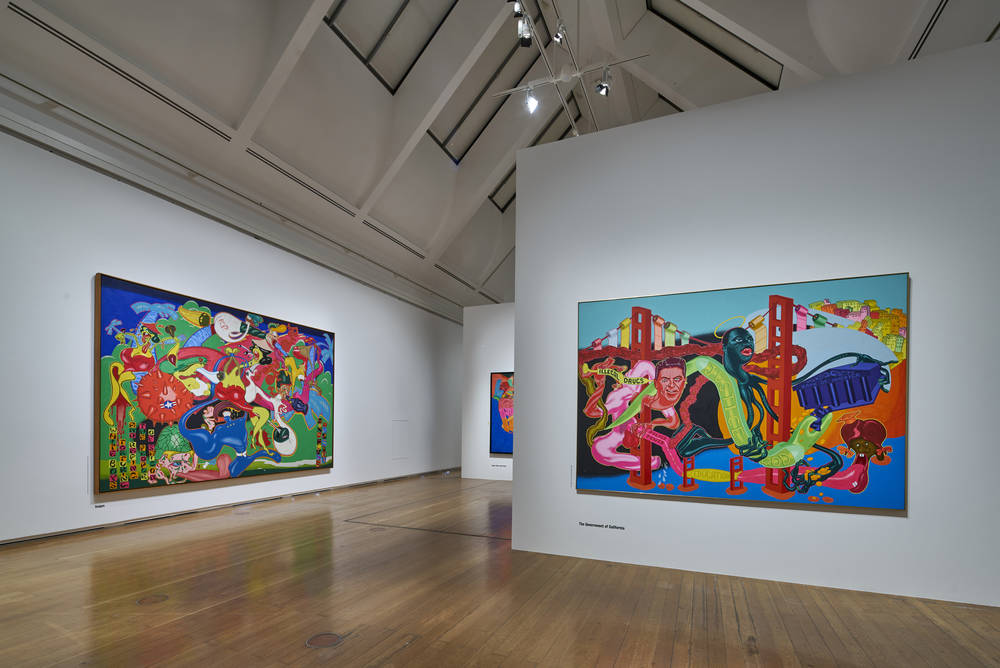
What do you like about the new retrospective?
Erik Parker: It’s an extraordinary show and offers a good insight into US culture and the political struggles of the 1970s and 1980s. For example, there’s the image portraying Black activist Angela Davis being maltreated by white pigs wielding syringes. It’s crass, but that’s what things were like back then.